Thursday, July 11, 2013

Gus Cileone: Voyeurism, Fantasy, and VERTIGO

BMFI film fan and author Gus Cileone interprets Alfred Hitchcock’s classic thriller Vertigo. Do you agree? See the film for yourself on the big screen at Bryn Mawr Film Institute on Wednesday, July 17. Vertigo is showing as part of our Hitchcock at the Height film series, which is presented in conjunction with a four-week film course about the filmmaker's best-known works.


Voyeurism, Fantasy, and Vertigo
By Gus Cileone, BMFI Film Fan
*Spoiler Alert*


Alfred Hitchcock addresses voyeurism often, which is fitting, since his audience lives vicariously through the characters he presents on the screen. But, he goes further, making the audience, from the perspective of the camera lens, an unseen presence stepping into the stories themselves. We become a Peeping Tom, like Jimmy Stewart in Rear Window; we observe Janet Leigh through the hole in the wall, in Psycho; we are accused directly of causing the coming apocalypse in the diner scene in The Birds.

In Vertigo, Jimmy Stewart’s weird obsession with Kim Novak’s Madeleine takes this voyeurism to the point of obsession. The voyeur has no respect for the individual, who is only a means to satisfy the voyeur's fantasy. In the opening credits we see a woman's face and then her eye. We then look into that eye, and there is a spinning pinwheel. Right from the beginning, Hitchcock is saying that a man can lose his balance with obsession over a woman.

After Stewart's detective, Scottie, discovers that he has acrophobia, hanging from a gutter after chasing a criminal, he is traumatized by witnessing a fellow policeman fall off the roof trying to save him. Falling becomes a motif in the film. The story takes place in hilly San Francisco, which symbolizes the precariousness of Scottie's predicament. (Scottie lives right near Coit Tower.) Probably because he feels guilty about the dead police officer, he dives into the bay to save Novak's character. But the jump also shows how dangerous his obsession can become. Of course, there are the falling deaths from the tower, and Scottie has dreams of falling off the tower. After the death of his fantasy woman, he drops into a state of catatonia, unable to be in the real world. The falling theme also refers to the danger of falling in love with the wrong person, for both Scottie and Novak's Judy. One could push it and say, for Scottie, the towers are phallic symbols, and the fear of falling could symbolize the fear of impotence in real life, thus encouraging the escape into fantasy.

Jimmy Stewart stars as a traumatized detective caught in a deadly scheme.
The acrophobia is not only a plot device so that Scottie can't witness it when Gavin (Thomas Helmore) throws his wife off the tower. It also symbolizes Stewart's character's inability to see the big picture from a height. He can only see as far as his version of a dream woman. The first scene deals with beauty and sex, as we watch his ex-fiancĂ©e, Midge (Barbara Bel Geddes), draw fashion pictures and discuss a newly designed bra. She is not the Hitchcock ice goddess, since she just draws beauty and clinically describes the bra's engineering. When she draws a picture of Novak as Gavin's wife Madeleine and substitutes her own face, Scottie quickly departs the room, showing how she does not fit his sexual requirements. She is real and can't compete with a dream girl. Gavin is an old friend, who knows of Scottie's disability, and wants Scottie to find out where his wife is going on her mysterious trips. At first Scottie is the voyeur spying on her beauty at the restaurant. Hitchcock places the audience in the car seat, following Novak, joining the detective in his fantasy. When he follows her through a dark walkway and opens the door, the scene lights up with the beautiful colors of flowers that the equally beautiful Novak is buying. It reminds one of Dorothy opening the door of her drab house to witness the awe of Oz, which is both a fantasy land and can be dangerous, just like Scottie's obsession.


Madeleine (Kim Novak), when Scottie follows her to the flower market.
The husband says a dead woman is possessing his wife. She goes into spells, visits her grave, and looks at the dead woman's painting on the wall of the gallery. Scottie observes that the curl in Novak's hair mirrors the curl of the dead woman in the painting. We realize that the circular curls also echo the theme of spinning wheels, leading to actual and symbolic vertigo. The story of the ghost plays into the whole unreal, fantasy theme of the film. Scottie sees Madeleine check into a hotel, but the concierge says she was not there that day, and there is no evidence of her in the hotel room. After Scottie rescues Madeleine from the bay, the camera shows her clothes hung up and drying in his home, and Novak naked under the covers in his bed. This is kind of creepy, knowing that she has been undressed by a stranger. It is as if Stewart's character presumptuously has actually taken possession of her (in contrast to her pretending to have become possessed) as an object in his fantasy world.


After rescuing Madeleine, Scottie takes her to his apartment.
When they are in the sequoia forest, Madeleine seems to disappear for a while, like an unearthly spirit. After his release from the mental institution, Scottie looks for Madeleine wherever he goes, like a morbid ghost hunter. It is ironic that he becomes haunted by the ghost of a woman who pretended to be haunted by another dead woman. Of course, when Scottie accidently sees Judy, thinking she is only a Madeleine look-alike and not part of the murder conspiracy, he wants to resurrect the dead Madeleine, forcing the now-in-love Judy to again play the same part. After Scottie finally recreates Madeleine by changing Judy’s make-up, hair color and style, and clothes, Novak materializes out of the hotel room's wall in a neon-sign-illuminated mist, like a ghost.

Scottie's obsession is a kind of madness. Gavin says there is madness in Madeleine's family, which sets the stage for the belief that she would commit suicide (her name even has the word "mad" in it). And, Scottie's madness leads to a sort of personality suicide as he realizes at the end, as Roger Ebert says in his book The Great Movies, that another man (Gavin) created the woman he wanted to forge, and thus Scottie's dream was not even his own. First he lost the person he wrongly thought was his ideal woman incarnate, and then he loses the woman he thought he created to be his perfect reproduction of his ideal. For Hitchcock, the desire to possess one's dream person is an impossible act and can only turn life into a nightmare.


Gus Cileone is a retired government employee who worked for the Department of Veterans Affairs. He has received several writing awards and has published two novels, A Lesson in Murder and Feast or Famine. You can visit his website at www.augustuscileone.com.

Tuesday, July 2, 2013

The Twelfth Night...of Filming MUCH ADO ABOUT NOTHING

By Kerri Grogan, BMFI Staff Assistant

What can you do with twelve days and a cast of actors you know and love? If you're Joss Whedon, the answer is Much Ado About Nothing, and it's playing here at BMFI until at least Thursday, July 11!

Joss Whedon's delightfully modernized take on Shakespeare was filmed in only twelve days at his own home, while he was on break from the set of Marvel's The Avengers. Whedon is no stranger to this sort of "Do It Yourself" film productionhis 2008 web-musical Dr. Horrible's Sing-Along Blog was entirely self-created and funded during the 2007-2008 Writers Guild of America strikebut even he was intimidated to try filming a production of the magnitude of Much Ado in such a short window.

"I had to convince Joss that this was a good idea," Kai Cole, Joss's wife and a producer of the film, said in an interview with Women and Hollywood. "He was exhausted and more than a little skeptical." Shakespeare had long been something Whedon and Cole wanted to tackle. For years, Whedon and his friends (including Amy Acker and Alexis Denisof, who play Beatrice and Benedick in the film) had been doing play readings at his home, and it was one of these readings that inspired the production of the film.

 Joss Whedon and actress Amy Acker (Beatrice) on the set of Much Ado About Nothing. The entire production was filmed in Whedon's Beverly Hills home, which was designed by his architect wife, Kai Cole.

Much Ado about Nothing was filmed in black and white using only natural lighting, accentuated with mirrors and glass. In an article by Emma John, Whedon speaks to some of the challenges he faced by filming in such a do-it-yourself style: "I did everything they say don't do... Great idea to shoot next to a golf course, by the way. You know what they do on golf courses all day? Mow."

Did you know? In Shakespeare's original play, set in Italy, the character of Claudio is a young lord of Florence. Click here for details on how you can enter BMFI's raffle to win a seven-night stay for two in Florence–including $1500 in spending money!


Kerri Grogan is BMFI’s Staff Assistant. She studied animation at the Maryland Institute College of Art, and moonlights as a dice-rolling, video gaming geek, blogger, and comic artist.

Russ Collins: Close Encounters of the Implosion Kind

Russ Collins, the Director of the Art House Convergence conference and a fellow film exhibitor, wrote a thoughtful essay responding to the somewhat alarmist predictions for the future of the film industry recently espoused by Steven Spielberg, George Lucas, and Steven Soderbergh. It is an excellent assessment of our industry and the role of art house movie theaters within it, and I echo his views. We are pleased to share it with you here.
- Juliet Goodfriend, President, Bryn Mawr Film Institute


Close Encounters of the Implosion Kind
Guest post by Russ Collins, Director of the Art House Convergence

Gary Meyer, [co-director of the Telluride Film Festival,] wrote, "I do not like to be a doom and gloom guy but I think there are big changes afoot for commercial cinemas, but not the scenario predicted here: Steven Spielberg Predicts 'Implosion' of Film Industry."

Like Gary, I am not a doom and gloom guy. However, it is tempting for older cinema artists like Steven Spielberg and soon-to-retire artists like Steven Soderbergh (or maybe it’s just filmmakers named Steven!) to see gloom in clouds of change. Change is hard. It frequently makes us feel discouraged or unfairly challenged. The shifting sands of change can cause us to see threats everywhere and feel the world as we know it will end. However, maybe we feel this way because it’s true. The world as we know it will indeed come to an end because change is the only constant, and creativity in art, business and all things is frequently born from what might appear to be destructive forces brewed from dynamic change. It is a defining story of living; a baseline truth, an ever repeating cycle of human existence that the Hindu religion represents so effectively in the story of Shiva, whose joyous dance of destruction celebrates the cycle of creation, preservation, and dissolution.

SHIVA DANCED ON THE MOVIES IN THE 1950s

Movie attendance at theaters in the USA by the late 1940s appeared stable at 4 BILLION admissions per year. By the early 1960s, movie attendance at theaters had fallen dramatically and re-stabilized at around 1 billion admissions per year—the theatrical audience was just 25% of what it had been 16 years earlier. It’s hard to imagine. We can feel better about movie attendance over the last 16 years because at about 1.4 billion annually, USA theatrical movie admissions have been fairly stable.

However, as a highly profitable, highly centralized business model, the movies—the pre-TV, Hollywood studio system heyday of the ‘20s, ‘30s and ‘40s—died in the 1950s. Shiva danced and Hollywood’s heyday died as television became a mature mass media market. During the 1950s, television replaced movies as the mass market media phenomenon of the 20th century. So the truth is, since the 1950s, movies, meaning all movies shown in theaters, are not “mainstream.” Movies shown in theaters are merely a specialty market with larger market segments (Hollywood blockbusters—action blockbuster, comedy blockbusters, Black blockbusters, chick flick blockbuster, kid live-action blockbusters, kid animated blockbuster, etc.) and smaller market segments (Indie American, documentary, classic, foreign, Masterpiece Theatre style, etc.) and sub-segments (mumblecore, experimental, films by local filmmakers, silent-era, Black American Indie, Jewish, French, German, Polish, Chilean, Brazilian, Iranian, Burkina Fasoian, Senegalese, Palestinian, Indian, Chinese, Korean, Japanese, Scandinavian, Ethiopia, Nigerian, Mexican, Canadian, classic noir, restored films, screwball comedies, Marx Bros., Woody Allen, Hitchcock, Kubrick, Ford, Sturges, Fellini, Truffaut, Warhol, Waters, etc., etc. etc.). Today, broadcast television is flat on its back because pay-per-view, paid-legit streaming, pirate streaming, cable, computer, smart phone, tablets, etc. are the “television” of today.

EVERY CINEMA ERA IS A HALCYON ERA TO SOMEBODY

During the second half of the 20th Century, the era in which TV has dominated, movie journalists and scholars seem to divide the post-Hollywood studio movie era into the following sub-eras:
  • The foreign film Art House / college movie society / Sex, Drugs and Rock & Roll generation saves Hollywood world of the late ‘50s, ‘60s and on into the mid-‘70s;
  • The Indie Cinema / Burgeoning Home Video / Hollywood Summer Blockbuster world of the late-‘70s, ‘80s and ‘90s;
  • The DIY-Mumblecore -Funny or Die / Pirate ethos / Digital Transition / Netflix queue / Hollywood Comic Book-Remake world of the early 21st century.
People in the movie business of different generations attach a “halcyon days” glow to different eras:
  • The Post-WWII-Early Baby Boomer generation seems to think the ‘60s youth reinvention of Hollywood is the halcyon era—folks like Robert Redford, Martin Scorsese, Steven Spielberg, George Lucas, Francis Ford Coppola.
  • The mid-to-late Baby Boomers and early GenXers appear to think that the Sundance/Miramax/New Line-Fine Line/Video Store/Indie Film Paradise of the ‘80s and ‘90s are the halcyon days—folks like Steven Soderbergh, Spike Lee, Quentin Tarantino, Jim Jarmusch, Kevin Smith.
  • Probably folks like the Duplass Brothers, Greta Gerwig, Debra Granik, Benh Zeitlin, the Funny Or Die guys and gals, and other filmmakers finding success in the current era will look back at the twenty-00s as a halcyon era of celluloid dreams found during the digital transition. An era that provided limitless YouTube possibilities, when the number of community-based, mission-driven Art Houses cinemas were growing (due to the Art House Convergence!) and everyone had the ability to earn a post-graduate motion picture education at Netflix U.
So, instead of filmmakers and pundits making broad statements assuming that movie exhibition exists as one giant mainstream market; let’s instead think about the theatrical exhibition market place as the segmented and diverse market that it is—and has been for generations!

STEVEN SPIELBERG WAS AN AGENT OF CHANGE:
WHY IS CHANGE FOREBODING TO HIM NOW?


The media and the general public seem to easily accept sweeping unsubstantiated statements about the movie exhibition marketplace. However, people seem to have a more nuanced and complex understanding of the music market. No one thinks of Lady Gaga, Wynton Marsalis, and the Boston Symphony playing to a large, singular music market. People seem to understand that each of these artists have their niche. So if pundits or a prominent musician said that the music industry will collapse unless arena shows continue to be successful (by the way, there are fewer and fewer arena shows these days), that pundit or musician would be mocked by Jon Stewart on The Daily Show. However, this is basically what Steven Spielberg said would happen to the film market. To illustrate this point I have replaced references to “movies,” in Steven Spielberg’s recent statement postulating that the movies will “implode,” with the appropriate musical reference:
“[Some ideas from young MUSICIANS AND MUSIC STUDENTS] are too fringe-y for MUSIC. That's the big danger, and there's eventually going to be an implosion — or a big meltdown. There's going to be an implosion where three or four or maybe even a half-dozen megabudget CONCERTS are going to go crashing into the ground, and that's going to change the paradigm."
Mr. Spielberg is a great artist in my opinion. He has a peerless career. His artistry and craftsmanship was so resonant with broad audiences in the 1970s and 1980s that he was significantly responsible for creating the summer blockbuster dynamic (Jaws) that allowed for the development of “megabudget” movies. For him to say that young filmmakers and film students are “too fringe-y” is absolutely true—they always have been fringy (but some are not—which is also true). To say that “[an implosion is] going to change the paradigm” is also true, because something is always changing paradigms—clearly Spielberg was an innocent agent of paradigm change as a young filmmaker!

Think about the world that Mr. Spielberg came into as a young filmmaker in the late 1960s and 1970s. The old line Hollywood Studios were reeling. There were no megaplex theaters – the movie exhibition innovation of that era was multiplex cinemas in shopping malls with postage stamp size theaters and screens. These shopping mall cinemas were causing the few remaining movie palaces, as well as single screen neighborhood cinemas to be abandoned or “twinned” or “quaded.” In the 1970s there was no generally accessible internet or movie streaming. For all intents and purposes there were no video rental stores or home video. Mr. Spielberg’s career was established during a period of a HUGE paradigm shift. He benefited from the newly created blockbuster movie marketing. He profited from the soon-to-follow home video explosion. But, I have to imagine from Mr. Spielberg's point of view, the paradigm shift in the 1970s was just the new “normal,” a “halcyon era” from which we are straying in the 21st century because theatrical exhibition is tenuous (as it has been since the 1940s), the home video market has dried up and people are watching pirated movies on their phone. Spielberg’s coming of age era was for him the halcyon period that the 21st century “implosion” will cause to go “crashing into the ground.”

But he is wrong. As said previously, the market for movies is actually diverse and highly segmented—although from the top-down movie industry vantage point and media punditry you would not think this to be true. Would we really mourn for Mr. Spielberg or ourselves if Lincoln would have been made for cable or had played on public television? Is it bad for humanity that cable television is creating wonderful, resonant stories in long-form moving image series that people want to watch at home on TV (or streamed onto their computer)? I don’t think so, but it is a paradigm shift and it might affect people’s theatrical moviegoing habits. Televisions in people’s homes have had that effect for seven decades—it is not a new phenomenon.

As Art House cinema impresarios we need to focus on what WE can do at our theaters and in our communities. It is not productive for us to fret over what pundits say or about what well-meaning filmmakers like the Stevens—Spielberg and Soderbergh—say. We should fret about what we can do in our communities. What we can do to support filmmakers. What we can do to raise philanthropic support from our communities. What we can do to increase the appreciation of film as art and as a transformational form of creativity. We need to be professional and be constantly innovative and clearly focused on building robust cinema exhibition businesses in our communities. We do not need to worry about commercial megaplex movie theaters. They will find ways to make money or they will implode and be replaced by other ways to promote large scale, broadly targeted cinema.

Commercial movie theaters have had several “implosions” through the years and new, effective and profitable paradigms have emerged. 1920s-era Movie Palaces killed Nickelodeons, the mom-and-pop storefront cinemas that established movies as a viable art form and profitable market. Mom-and-pop theater owners were very upset and felt unfairly treated by the Movie Palace paradigm shift; it was a most tumultuous and difficult era in theatrical movie exhibition. Technology forced dynamic change as talking pictures made Movie Palaces inefficient. What emerged was the more efficient but less spectacular, single screen cinema-style theaters of the ‘30s and ‘40s. Television nearly killed single screen theaters and Movie Palaces, and the shopping mall multiplex theaters of the 1970s finished the job. Megaplexes killed multiplexes. Who knows, maybe megaplexes will be killed by high-priced deluxe cinemas with fine dining options—who cares! Maybe all commercial theaters in the future will be like IMAX theaters. The paradigm shift that takes down the megaplex is not a dynamic we as an Art House community will control. We can learn from and adapt to whatever changes may occur to the Megaplex paradigm. However, we do not control those changes so it is fruitless to fret about them. The cinema market is large and diverse and our job is to focus on our small but essential piece of the movie market—the community-based, mission-driven piece of exhibiting cinema to movie lovers in our home towns. As Ira Deutchman said to us at the [2013 Art House] Convergence, we must understand and embrace the fact that what we do is hard, but we should never take the easy path.

IN A TIME OF CHANGE ART HOUSE CINEMAS HAVE AN ADVANTAGE

Being connected to your community, you have a role in defining that community. You can make sure your community values having an Art House. You must strive to be consistently innovative in how YOU run YOUR Art House; this will create consistent success. But it requires capital, hard work and the willingness to adapt to changes; changes in technology (digital cinema), in programming (day and date release with home viewing opportunities), in being an effective fundraising professional and a teacher of moving image aesthetics, history and practice. You are the impresario of the most important cultural product created in the American century. You deserve to be a key quality of life institution in your community.

Although the venal dynamics of Hollywood cause the Art House to be undervalued, we must remember that the Art House is vitally important because it is where the beating heart of cinema culture lives. We must keep that heart healthy. Let us execute our heart based Art House cinema in the best possible way, for its own sake and for the general health of our community and cinema art. And, please, let us not be afraid of change.

Change is inevitable. It is foolish to think that change will not happen. Change brings with it opportunity, and there is great opportunity for the Art House to flourish. Why? Because there are more movies made now than at any time in human history. This means all vital channels in which cinema can be presented can succeed—they won’t, but they can. And the community-based Art House has a distinct advantage because, as we have known for a little over 100 years ago, seeing a movie on a big screen, in a darkened room full of strangers is a profound and moving experience. Many humans, many of our neighbors seem to need the experience of gathering communally to experience stories and receive information. The Art House is that place, because it is the community’s living room, or better still, the communal campfire where people can learn, be entertained and transported by stories that are spun by that most brilliant of story tellers – the motion picture.

Keep the faith, Art House friends. You are the best—now let’s get better!


The Art House Convergence is an annual gathering of art house cinemas across the country. Russ Collins, the conference's director and the CEO of the Michigan Theater in Ann Arbor, was recently listed as one of IndieWIRE's top 40 influencers of 2013.

Tuesday, June 18, 2013

Harold Lloyd: A Legacy

By Devin Wachs, Public Relations Manager, BMFI

This is the second part of a two-part interview with Harold Lloyd's granddaughter, Suzanne Lloyd, in honor of Bryn Mawr Film Institute's screening of Safety Last! on June 25. Read the first part here.

Harold Lloyd keeps his granddaughter Suzanne quite busy. As the caretaker for his collection, she is responsible for preserving one of the largest private film libraries in the world and introducing the silent comedy legend to new audiences. Her grandfather’s film library gets around so much, in fact, that she laughingly calls the collection “Harold”, as if it is a person, “because ‘he’ is so busy.” (She lovingly refers to the man himself as “Dad”.)


Harold Lloyd dangles above the street below in this iconic scene from Safety Last!, a new restoration of which recently screened at the Cannes Film Festival and will be featured at Bryn Mawr Film Institute on June 25.
It has indeed been a busy few months. After taking “Harold” to the Cannes Film Festival for an oceanfront screening of the new restoration of Safety Last!—showing at Bryn Mawr Film Institute on June 25—they were off to England to oversee the recording of composer Carl Davis’s new scores for The Freshman and High and Dizzy with the Birmingham Symphony Orchestra. Recently, home viewers also enjoyed fifteen newly restored Harold Lloyd shorts on Turner Classic Movies, co-hosted by Suzanne.

A Grandfather’s Gifts

Suzanne was granted a very special view into classic Hollywood from a young age. She was raised at Greenacres, her grandparents’ estate in Beverly Hills, where she was neighbors with the likes of Cary Grant and schoolmates with the daughters of Jimmy Stewart, William Wellman, and Randolph Scott.

“One of [my grandfather’s] dearest friends was Doug Fairbanks—his best friend—and Mary Pickford was one of my grandmother’s best friends. I used to go to see ‘Aunt Mary’ all the time. She had great cookies, nice dogs. Colleen Moore was my godmother. I had no idea who they were. You just accept them as your grandparents’ friends. I got a clue who Walt Disney was when I was older. He had a train in his backyard, and when we went to Disneyland, I put it together that it was named for the same guy with the train.”

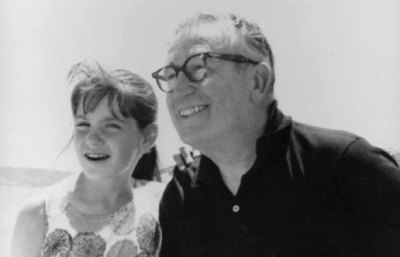
Suzanne Lloyd with her grandfather, Harold.
Suzanne knew her grandfather first and foremost as a photographer, philanthropist, and technology enthusiast. She remembers when, as a child, they visited Charlie Chaplin at his house in Switzerland. “They said that he worked in the same business that Dad did, but I thought that meant running hospitals, or taking pictures. I didn't realize who he was.”

When Harold passed away in 1971, Suzanne was only nineteen-and-a-half years old, but she was entrusted with the task of protecting his legacy and managing his film library, a responsibility for which Harold had been unofficially grooming her for years.

“It was a real privilege. But I worked on the films with him before he died and I really knew them. I used to go lectures with him. I went to the opening of the American Film Institute. When about fifteen, I started I started working on the films with him at the house with a couple of film students.

“My first job was to clean, rewrap, and air out nitrate film. Have you ever smelled nitrate film? It’s not fun. Dad said, ‘This is a good way to break you in. Film isn’t fun, it’s hard work. You need to know the elements of film before you can do more.’”

He arranged for Suzanne to take film classes at USC when she was just a senior in high school. Although Harold had retired in 1947, before Suzanne was born, if friends were shooting a movie, he’d take her to visit the sets.

“Robert Wise was shooting Star at Fox. I’d just broken my leg—it was a bad break. I couldn’t go to school. Dad called him up and said, ‘Listen, Bob, I’m trying to give Sue an overview of stuff, but I’m not on set anymore.’ So I went down to the set and they put me in one of the director’s chairs every day while they worked. I put my leg up; the grips just moved the chair around. For two or three weeks, I just sat there, every day. ‘Just sit there, take notes,’ they told me.” She did.

Passing the Torch

“He was very good about passing on torches and helping others. He started a lot of people’s careers,” Suzanne recalls. Jack Lemmon’s son, Chris, was born in Harold’s beach house, where Harold let Jack and his wife live while Jack was starting out as an actor. Robert Wagner was introduced to Harold through Suzanne’s mom, and he became close with the Lloyd family. “Dad said, ‘Well, maybe we’d better get you an agent.’ That led to his first job.”

And those young film students that worked with Suzanne to help Harold archive his films? “They were Rich Correll—the son of Charles Correll, who played Andy in Amos and Andy—and David Nowell, who’s now one of the top aerial cinematographers in the world. Richard is one of the creators of Hannah Montana. He did the restorations on the new shorts for Turner Classic Movies, and he still has me rewinding the film and marking the positions. I never seem to have gotten out of that!” Suzanne reflects with a hearty laugh.

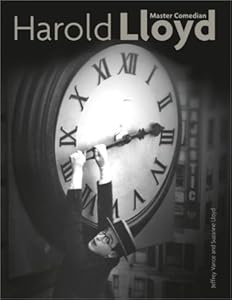
In the decades since Suzanne has assumed responsibility for preserving Harold Lloyd’s film library, she has introduced his work to new audiences in numerous ways. In addition to presenting his newly restored films at festivals worldwide and on Turner Classic Movies, she also co-authored the 2002 book Harold Lloyd: Master Comedian, has compiled two books of his 3-D photographs, and was the executive producer for the Emmy-nominated British documentary, Harold Lloyd: The Third Genius.

“It’s Harold’s Job”

I asked Suzanne what has surprised her most about Harold over the years, and if there were things that she is still learning about him through his working with his films.

“I had to really learn to do public speaking when I was young. The first time I went out to introduce the films I was nervous. This archivist who had worked on them said, ‘Speak from your heart. Just remember, the moment that Harold gets up there, it’s Harold’s job. He knows what to do, he’s always known what to do.’ The laughter and reactions to his films are just amazing, year after year. I wish I could have been there in the beginning, but they are so consistent, I bet it’s the same as it is now. You need to see his films with an audience. People who have never seen them come out saying, ‘Why haven’t we seen him? Where has he been?’ That just thrills me and amazes me every time.”

Thanks to Suzanne’s work, the laughs will keep coming and new audiences will continue to be able to discover “Harold”, both the man and his film legacy, for a long time to come.

See the 90th anniversary digital restoration of Safety Last! at Bryn Mawr Film Institute on June 25.


Devin Wachs is the Public Relations Manager for Bryn Mawr Film Institute. She joined BMFI in 2005, following her graduation from Bryn Mawr College. If you send BMFI a message on Facebook or Twitter or are interested in onscreen sponsorships, she's the one who will be in touch!

Tuesday, June 11, 2013

Harold Lloyd: The Grand Prince of Cinema

By Devin Wachs, Public Relations Manager, BMFI

This is the first part of a two-part interview with Harold Lloyd's granddaughter, Suzanne Lloyd, in honor of Bryn Mawr Film Institute's screening of Safety Last! on June 25.
Film comedian extraordinaire Harold Lloyd returned to the Cannes Film Festival this year, thanks to a brand-new digital restoration of his hit 1923 comedy, Safety Last!

“The 2k restoration is just gorgeous. I’ve seen it on the big screen, and once you’ve seen it on the huge screen, it’s amazing. It’s incredible,” his granddaughter, Suzanne Lloyd, enthuses.

Bryn Mawr Film Institute is among the theaters featuring the new restoration of Safety Last! The film, which just celebrated its 90th anniversary, will also be released on Blu-Ray through The Criterion Collection. Even as she was preparing to leave for Cannes later that day, Suzanne generously gave her time for a phone interview from her home in Los Angeles.

It’s not the first time she’s accompanied the silent film legend to Cannes. “He actually took me to Cannes when he won in 1962. I went with my grandmother, my mother, and his assistant, Roy Brooks.” Harold lit the festival on fire that year when he presented a compilation of some of his best work, Harold Lloyd’s World of Comedy, and was honored with a plaque that read “To the Grand Prince of Cinema.”

The King of Daredevil Comedy

Harold Lloyd started in Hollywood by sneaking onto the Universal lot, where he struck up a friendship with producer Hal Roach. For Roach’s production company, Harold created a variety of characters reminiscent of Chaplin’s Little Tramp. His one-reel comedies soon became two-reelers after he developed his own “glasses” character, an everyman romantic lead and boy-next-door that audiences loved.

Safety Last!, one of the “thrill comedies” Harold made, was a turning point in his career and contains one of the most iconic images in silent cinema: Harold dangling from the face of a giant clock high over the street below. In the 1923 feature, Harold plays a hard-working everyman who ends up climbing the side of a skyscraper as part of a marketing stunt in order to make his girlfriend think he’s a successful businessman.

The film was a big hit, and Harold Lloyd was named the “King of Daredevil Comedy.” Following on its heels were Lloyd's features The Freshman (1925), The Kid Brother (1927), and Speedy (1928), making him the number one box office star two years in a row in the late ‘20s.


In Safety Last!, Harold plays a department store salesclerk pretending to make it big in order to impress his girlfriend.

Being Funny is a Serious Business

Suzanne’s grandmother, Mildred, played Harold’s love interest in Safety Last! The onscreen couple was courting during production.

“Right before the movie was released, my grandparents got married,” Suzanne states. “Well, it was the last film that she ever made with him, because he wasn’t going to play with his married wife in movies. He didn’t think it was that funny—he was supposed to be the bachelor chasing the girl. That’s when Jobyna Ralston stepped in to be his leading lady. But my grandparents had really good chemistry together and [my grandmother] adored him. They were married for 49 years. She was nineteen when she started with him; she was with him when he had his bomb accident.”


Mildred Davis and Harold Lloyd in a promotional image for A Sailor Made Man (1921). They starred in several films together before they were married in 1923.

At a promotional photo shoot at Hal Roach’s studio in 1919, Harold was supposed to light a cigarette with a fake prop bomb. The bomb went off in Harold’s hand, blinding him and blowing off part of his right hand. His career was said to be over.

“Who put the bomb there?” Suzanne queries. “He was working on his third film with my grandmother, Mildred, and this happens. It was absolutely killing.”

Douglas Fairbanks, Harold’s best friend, came to visit Harold and offered him a place at his studio, United Artists. But Harold refused: “You have your comedian.” (Charlie Chaplin was one of the studio founders.) Douglas asked him what he was going to do, and Harold replied, “I’m going to wait and see and think positive. They think my eyes can come back.”

Lo and behold, in a few months, sight had returned in both eyes and his face had started to heal.

Suzanne reflects, “He was just a driven person and he was so enthusiastic about life and such a positive thinker—Why Worry? is actually the name of one of his films. He believed that you have to be positive and things will work out.”

He didn’t let the accident slow him down, and he kept his scars from the public.


Harold Lloyd was known for performing his own stunts in "thrill comedies".
His films grossed more than Charlie Chaplin's or Buster Keaton's.

“They had several movies ready for release,” Suzanne explains. “He said, ‘I don’t want people to come in there and look for my handicap or disability. Just hold the movies back. Instead of putting the movies out every two weeks, hold them back so I’m not dropped from the screen.’” Roach had a thin flesh-colored glove made in New York to cover the injury. Harold went back to work nine months later, but wore the glove in every movie he made after the accident.

“People really didn’t know in the public,” Suzanne continues. “He learned to do autographs with his left hand. He’d keep his hand in his pocket at premieres and things. He’d shake with his left hand; if he really knew you and you were a good friend of his, he’d give you his right hand. He was always athletic and always played handball. He played handball even with his bad hand, to build up strength.”

So when Harold was dangling from the clock face in Safety Last!, only a few years later, he was performing the daredevil stunt with only one complete hand.

A Modern Visionary

By the time he retired from the screen in 1947, Harold Lloyd had made 200 films. But retirement didn’t mean “rest” for the go-getter. He devoted himself to the Shriner Hospitals for Children and, in the 1960s, he was named President and Chairman of the Board. Always fascinated by photography, he was an avid 3-D photographer and an early proponent of the idea of using 3-D in films. His photography library contains nearly 300,000 stereo slides he made from 1947 to 1971.

“He was just a real visionary and a pioneer,” Suzanne says. “He was controlling about his films to the point where he didn’t want them put on television where an editor would hack them up for commercials [and ruin the pacing]. A number of generations lost out because he didn’t want to do that. In some ways, Harold is behind in recognition compared to Chaplin or Keaton.

“But if you play a Harold Lloyd film, he‘s more modern,” she continues. “He’s not in a character. He’s your Tom Hanks, your Jimmy Stewart, your Jack Lemmon, maybe your Jason Bateman. He’s your guy on the street. He’s always smiling, he’s always moving. He’s always getting into trouble and getting out of trouble… He set the template for romantic comedy.”

The 90th anniversary digital restoration of Safety Last! will be showing at Bryn Mawr Film Institute on Tuesday, June 25.

Devin Wachs is the Public Relations Manager for Bryn Mawr Film Institute. She joined BMFI in 2005, following her graduation from Bryn Mawr College. If you send BMFI a message on Facebook or Twitter or are interested in onscreen sponsorships, she's the one who will be in touch!

Friday, May 31, 2013

Summer Classics: BMFI Staff Picks

By Devin Wachs, Public Relations Manager, BMFI 

Our annual Summer Classics series of repertory favorites from Hollywood and beyond begins next week, Tuesday, June 4, with the original King Kong. All summer long, we’ll be featuring vintage and recent classics on the big screen, with film series celebrating iconic filmmakers Alfred Hitchcock and David Lean, three new sing-alongs, the new 90th anniversary DCP restoration of Harold Lloyd’s silent comedy Safety Last!, and one night Summer Classic Seminars on Back to the Future and Brief Encounter. In addition, for the first time we’re featuring family films on Saturday mornings all summer long, including a month of the Marx Brothers!

We asked some of our staff to tell us what they're most looking forward to seeing at BMFI this summer. Do you agree? What are you excited to see?

Little Shop of Horrors Sing-along – Wednesday, June 12, 7:00 pm
Chosen by Kerri Grogan, Staff Assistant

I don't know about you, but I make it a habit to sing along with every musical I know, every time I watch them. And what's more fun than a campy musical about carnivorous alien plants? Answer: watching campy musicals about carnivorous alien plants on a big screen...and singing along with everyone in the theater. It sounds like it's gonna be a blast.

Sing along with Rick Moranis, who plays Seymour, the caretaker to the floral menace known as Audrey II in Little Shop of Horrors.

Safety Last! – Tuesday, June 25, 7:00 pm
Chosen by Andrew J. Douglas, Ph.D., Director of Education

I’m very much looking forward to Safety Last! (1923) because though it’s Harold Lloyd’s most famous film, it really hasn’t been seen by a large segment of the contemporary audience, and this style of daring, physical comedy—similarly performed by Lloyd’s (even) more famous peers, Buster Keaton, Charlie Chaplin, and Roscoe “Fatty” Arbuckle—is a lost art that needs to be preserved, and enjoyed, through theatrical screenings like this one. Also, I think, not unlike “Rosebud,” far more people know the image of a man dangling from a clock, (apparently) high above a city street, than have actually seen the film from which it originates, and I like that people who come to see the film will be reminded of that connection—or make it for the first time.

Harold Lloyd hangs precariously from the clock of a New York skyscraper in Safety Last!

Back to the Future - Tuesday, July 2
Film at 7:00 pm
Summer Classics Seminar at 6:30 pm
Chosen by Valerie Temple, Programming Manager

I'm teaching a Summer Classics Seminar on Back to the Future, but that's only part of the reason I'm looking forward to seeing the time travelling adventure on the big screen. Even though I've seen this particular film approximately 192 times (at least), I've never had the pleasure of seeing it on the big screen. Finally, I'll get to see that souped up DeLorean zooming across a screen larger than my TV! I am worried that I'll disturb the other patrons as I know the dialogue by heart and can't help but quote along with the movie. So, if you come to the screening and I'm making too much of a ruckus, don't hesitate to tell me to "make like a tree and get out of there!"

Great Scott! Christopher Lloyd and Michael J. Fox are perfectly cast in Back to the Future.

Brief Encounter - Tuesday, August 13
Film at 7:00 pm
Summer Classics Seminar at 6:30 pm

Chosen by Pat Wesley, Director of Development and Communications

I am not sure which pairing is less likely: two thirty-something, properly married (to others) war-time Brits or David Lean and NoĂ«l Coward. I do know the result is a wistful, tender Brief Encounter and I can’t wait to get lost again in the foggy heartbreak of it all.

Celia Johnson, boarding a train, shares a poignant look with Trevor Howard in Brief Encounter

Heavyweights – Saturday, August 17, 11:00 am
Chosen by Andrew J. Douglas, Ph.D., Director of Education

I’ve never seen Heavyweights, but I’m very much looking forward to completing the trilogy of Ben Stiller-as-extremely-fit-but-dumb-as-a-bag-of-hammers-guy films that also includes Zoolander (2001) and Dodgeball (2004). Given the Disney branding and family-friendly elements of this film, I’m not expecting for the hilarity to be quite as ribald as it was in those films, but on the other hand, with co-writer/executive producer Judd Apatow (The 40-Year-Old Virgin) behind the scenes, and comic talents like Paul Feig (director of Bridesmaids), Kenan Thompson (Saturday Night Live), Jeffrey Tambor (Arrested Development), and comedy duo Jerry Stiller and Anne Meara on screen, I don’t think I’ll be disappointed.

Ben Stiller stars in Heavyweights as the insane (and insanely strict) fitness coach at Camp Hope.


For my part, although many of these films are personal favorites, I am particularly excited to bring a recent delight back to BMFI: Magic Camp, which we'll be showing on Monday, July 15 at 1:15 pm. If you missed our Pennsylvania Premiere of the film in December, this is your chance to see this charming documentary about Tannen's Magic Camp on the big screen again, with the added bonus of a Q&A with director Judd Ehrlich and performances by professional magicians who are instructors at the camp. Plus, it was filmed a few blocks away at Bryn Mawr College, where the camp meets!

Meet Magic Camp filmmaker Judd Ehrlich and campers and instructors from Tannen's Magic Camp at BMFI's encore of this fun documentary.

You can explore all of our films and upcoming events, watch trailers, and buy tickets at BrynMawrFilm.org, or look at the latest issue of Projections, our program guide.


Devin Wachs is the Public Relations Manager for Bryn Mawr Film Institute. She joined BMFI in 2005, following her graduation from Bryn Mawr College. If you send BMFI a message on Facebook or Twitter or are interested in onscreen sponsorships, she's the one who'll be in touch!

Friday, May 24, 2013

Spring Breakdown: Recent Events at BMFI

By Kerri Grogan, BMFI Staff Assistant

Spring is officially in full swing, and so is the programming here at BMFI! The last few weeks have been a whirlwind of activity. Here are some of our recent highlights.

Critically Acclaimed: An Evening with the Critics

Film critics and enthusiasts alike gathered for the highly anticipated "Critically Acclaimed: An Evening with the Critics". The May 10 event celebrated film criticism and honored four top film critics—A. O. Scott, Lisa Schwarzbaum, Carrie Rickey, and Steven Rea—who discussed their work and what's in store for film criticism in the 21st century. BMFI President Juliet Goodfriend moderated the in-theater event, which was recorded by SpectiCast and is now available for digital distribution to art house theaters across the country. A Dinner with the Critics, hosted at the Merion Cricket Club, followed the main event.


Juliet Goodfriend greets the evening’s speakers (left to right: A. O. Scott, Steven Rea, Lisa Schwarzbaum, and Carrie Rickey) before the program begins, while guests enjoy a reception in the atrium.

In the theater, our guest critics participate in a lively discussion about the future of film criticism.

Science on Screen Film Series
"Does science really work like it does in the movies?" BMFI explored this question with its Science on Screen series, which paired classic and recent films with introductory talks by notable figures from related scientific fields who discussed their work and research. Audiences explored archaeology with Dr. Harrison Eiteljorg II before Raiders of the Lost Ark, delved into computer game production with indie game designer Halsted Larsson (Jamestown: Legend of the Lost Colony) in honor of Wreck-It Ralph, got a taste of food anthropology with Dr. Solomon Katz to whet their appetites for Babette’s Feast, and braved the elements with Dr. Raluca Ellis in anticipation of Future Weather. The series was made possible by a grant from the Coolidge Corner Theatre and the Alfred P. Sloan Foundation.

Indie game designer Halsted Larsson of Final Form Games talked shop before audiences were wowed by Wreck-It Ralph.

Food anthropologist Solomon Katz, Ph.D., signs the guestbook before our screening of Babette’s Feast. Guests also enjoyed some tasty French pastries before the show.


Future Weather producer Kristin Fairweather (left) poses with Science on Screen speaker Raluca Ellis, Ph.D., and Philadelphia Women in Film and Television (PWIFT)’s Veronica Stickelman. Following the film, Kristin answered audience questions in a panel introduced by the Greater Philadelphia Film Office and moderated by PWIFT.

Tri-Co Film Festival
Attendees from Bryn Mawr College, Haverford College, and Swarthmore College were dressed to the nines for the second Tri-Co Film Festival on May 1. Community members and students alike enjoyed the one-night festival, which featured 23 amazing films created by students at the three schools. The program was curated by students and judged by Shari Frilot, Senior Programmer at the Sundance Film Festival.

Student filmmakers receive the red carpet treatment in the atrium before the start of the event. Photo credit: Bryn Mawr College.

Juliet Goodfriend (center) clowns around with one of the student curators and faculty advisor Roya Rastegar, Ph.D. Photo credit: Bryn Mawr College.

Oliver! Sing-along
Guests were treated to a live performance by the Footlighters Theater players before belting out their favorite tunes as the Academy Award-winning film version of Oliver! played on the big screen.

Several cast members from Footlighters Theater’s current production of Oliver! performed before BMFI’s sing-along to the film version!


Kerri Grogan is BMFI’s Staff Assistant, and although her first love is animation, she moonlights as a dice-rolling, video gaming geek and comic artist.

Thursday, April 25, 2013

Meet Our New Staff Assistant

By Devin Wachs, Public Relations Manager, BMFI

This week, Bryn Mawr Film Institute welcomed the newest member of its staff: Kerri Grogan, our new Staff Assistant. An animator who customers at Merion Art and Repro already know and love for her sunny disposition and can-do attitude, she will be supporting BMFI’s education, outreach, programming, and public relations initiatives. You’ll also be hearing more from her here, on BMFInsights.
Tell us a little about yourself.  
I'm an animator, artist, crafter, and blogger [MotionSavvy] from North Carolina. I went to college in Maryland and several years later moved to Delaware County, Pennsylvania. I love movies—not just animated ones—and storytelling is something I'm very passionate about. Also, I tend to be a huge nerd about many a thing.
You studied animation. Do you have a favorite animator or character?  
There are a few. I really admire Tomm Moore (director, The Secret of Kells) and Glen Keane (character animator, The Little Mermaid, Beauty and the Beast) for their talent and their vision. I think every hand-drawn animator has to at least mention Miyazaki as well. But my absolute favorite animator is probably Don Bluth (director, The Secret of NIMH, Anastasia, others). Not specifically because I think his movies are the absolute best thing out there—although it's true that he can singlehandedly be blamed for my life-long love of dinosaurs, and I do think The Secret of NIMH, especially, is a truly great movie—but because he's so passionate about the medium.
What is your favorite film? Why do you love it?  
Spirited Away. I think part of my love for it is personal and nostalgic, but it's also true that everything about this movie is beautiful and incredibly well paced and put together.
What is your all-time favorite cinema experience?  
When I was in college, part of my final animation coursework was to complete my own short animated film. I worked on my project for the duration of the school year, from concept to completion, and when it was finally ready—after many long and sleepless nights—my class presented all of the work as a senior show in the large campus theater. The films were really incredible...my classmates were (and still are!) extremely talented. When I saw the title of my piece on the screen, I gasped. Seriously, my jaw dropped. I covered my mouth and watched in silence, my hands shaking. I think I might've teared up a bit when I saw my name in the credits. When you create something, you can look at it a million times during the process and be analytical about it. But even when you know it has problems, and you can see all of those problems while you watch the final cut, there's nothing quite like watching something you've slaved, anguished, and angsted over on the big screen. It's really powerful.
If you see Kerri upon your next visit to BMFI, please welcome her!

Friday, April 5, 2013

Gus Cileone: Why I Love Sidney Lumet's THE VERDICT

In advance of our four-week class on filmmaker Sidney Lumet starting Tuesday, April 9 at the National Museum of American Jewish History, film fan Gus Cileone looks at the depiction of truth in one of his favorite Lumet films, The Verdict, starring Paul Newman.


Why I Love Sidney Lumet's The Verdict
By Gus Cileone, BMFI Patron and Film Fan
*Spoiler Alert*

We lost one of our most gifted and prolific directors not too long ago. Sidney Lumet made such great films as: Long Day's Journey into Night, Fail-Safe, The Pawnbroker, and Network. However, a number of his films deal with crime and the legal system. These include: 12 Angry Men, Serpico, Murder on the Orient Express, Dog Day Afternoon, and Prince of the City.

My favorite movie in this area, one that deals with who stands for what is right and what is wrong, is The Verdict. You cannot find another title of a movie that has so much to do with what the film is about. The word "verdict" is derived from the Latin and means "to speak the truth." This movie shows how lies can have tragic consequences and how outward appearances are not good indicators as to who is the most reliable source of truth. It is here where the marriage of Lumet with writer David Mamet is a match made in screenwriting heaven. Mamet, too, deals with the line between justice and injustice, society's rules and the breaking of those rules, in such films as House of Games, The Spanish Prisoner, Glengarry Glen Ross, and The Edge.

The Verdict, a 1982 film, showcases Paul Newman—in maybe his best performance—as Frank Galvin, a promising lawyer who has fallen from legal and ethical grace in the Catholic world of Boston's jurisprudence. We first see him as an alcoholic who tries to fund visits to his favorite bar by browsing the obituaries and soliciting representation from grieving families at funerals, pretending to be a friend of the deceased. His foul-mouthed mentor, Mick (Jack Warden), throws a potentially lucrative malpractice case his way. At first, Frank is just out for the money, looking for a quick settlement. He reassures the family of the comatose victim while not revealing his dilapidated office (an expressionistic touch that mirrors his life), under the pretense that it is filled with paper for another case (a lie). He also hangs a sheet of paper on his door that says he is meeting with the judge (untrue).

Paul Newman stars as a lawyer seeking redemption in Sidney Lumet's The Verdict.

The way setting is presented in this film depicts who has power and who are the downtrodden. In his book, Making Movies, Lumet says, "In The Verdict we used a very narrow color selection and older architecture. No modern buildings were seen in the movie." St. Catherine's (the Catholic Hospital), the courtroom, the office of James Mason's defending lawyer Concannon (whose name implies he is a big shot), Frank's sleazy apartment, and even the bar Frank frequents are old fashioned in style, but are differentiated as to level of refinement by those who populate them. The heft of the dark hardwood weighs everything down, emphasizing how difficult it is to alter society's entrenched power structure. Lumet emphasizes the disparity as to the opposing sides as he cuts between the old legal library where Newman and Warden prepare for the case, and the army of litigators in the opulent conference room presided over by Mason.

Editing is essential in showing Frank gravitating back to his ethical base (and living up to his name which means "free from guile"). As Lumet writes in Making Movies, "In The Verdict, the most important transition in the movie was illuminated by the close-ups of Paul Newman examining a Polaroid photograph. He had taken the picture of the victim, and he watched it develop. As the photograph took on life, he did too. I could feel the present breaking through for a man who, up until then, had been trapped in the detritus of his past life. It was the intercutting between the developing Polaroid and the close-ups of Newman that made the transition palpable." When Frank meets the Bishop (played by Edward Binns), he cannot accept the low offer that the Bishop gives him because "no one will know the truth" that those who should have looked after his client failed her. If he takes the hush money, he will be "lost."

James Mason and Paul Newman face off in Sidney Lumet's The Verdict.
Past lies have derailed Frank before and hinder his forward movement in the present. Warden tells Frank's new girlfriend, Laura (Charlotte Rampling), that Frank was forced to lie and take the fall for his law firm's jury tampering after he threatened to expose his partners. He lost his job and his wife. In the current case, he has a doctor willing to testify against a peer, but that physician is forced out of the country by the powers-that-be, so he cannot tell the truth. Even Frank is not honest with the relatives of the patient about no longer wanting to settle out of court. Concannon is always one step ahead of Frank and we find out why: Mick finds Concannon's check made out to Laura, who is a spy, feeding information to Concannon. Ironic that on their second meeting Frank tells Laura, "Tell me the truth. You can't lie to me." But she has fallen for Frank, and does not tell Concannon about the admitting nurse (Lindsay Crouse), who Frank convinces to testify. The esteemed doctor had not read that the patient had a full meal one hour prior to the delivery of her baby, and she aspirated vomit in her mask, causing her to lose oxygen, creating the vegetative state. The doctor then coerced the nurse to lie about the time of the meal, changing the "1" to a "9." The lies of the powerful spread like a virus to infect those working for them. It is ironic to see Concannon, who has been duplicitous with Laura, lecture the nurse about perjury. Even though the photocopy of the original admitting form is tossed out, the testimony is heard by the jury. The Bishop asks an underling, after the nurse's testimony, that despite Concannon's legal prowess, did he believe her? The other's silence shows that the jury saw the truth. The irony that the supposedly trustworthy Catholic Church is behind such a distasteful cover-up is evident here. Earlier in the film, Frank tells Laura, "The jury wants to believe. I mean they want to believe." In his summation, Frank says that we hear so many lies, we doubt our institutions, we feel powerless, and we become victims. But he tells the jury the outward signs of stature and tradition don't matter because today they are the law, and he believes that there is justice in our hearts.

Ultimately, the financial settlement is not as important as is the moral victory and truth may bring redemption, but it does not erase the betrayal of lies.


Gus Cileone is a retired government employee who worked for the Department of Veterans Affairs. He has received several writing awards and has published two novels, A Lesson in Murder and Feast or Famine. You can visit his web site at www.augustuscileone.com.

Wednesday, March 27, 2013

The Female Gaze: Alice Neel and Women Artists Who Inspire

By Devin Wachs, Public Relations Manager

In honor of tomorrow's screening of Alice Neel, a documentary about the esteemed 20th century painter known for her expressive oil portraits, we asked audience members who their favorite female artist was and why. A number were fans of Neel's work, which you can currently see on display in the show The Female Gaze: Women Artists Making Their World at the Pennsylvania Academy of the Fine Arts (PAFA).

Here are our favorite responses:
"My favorite female artist is Mary Cassatt. I've always loved her paintings of children--playing at shore, little girl in a straw hat, little girl in a chair. The paintings are lovely and peaceful. Love her use of color and how her paintings make me feel.
I grew up in Augusta, GA. Now I live in Berwyn and exercise at the Upper Main Line Y--[located in] the Cassatt mansion. Life is surprising." - Joan Coney

Little Girl in a Blue Armchair, 1878 (oil on canvas) by Mary Stevenson Cassatt (1844-1926)
"Alice Neel is my very favorite female artist and I am very fortunate to own one of her still lifes. I met her a year before she died and she showed an interest in doing my portrait but became ill so it never happened. Her art speaks to me with an expressiveness that very few other artists show." - Shirley L. Kurland
"There is no question... Alice Neel is my favorite female artist. Any woman who will paint a nude portrait of herself in her seventies when her bod badly needs ironing has my vote!" - Jean Homeier

Alice Neel at work in the documentary Alice Neel, showing at BMFI this week.
"Georgia O'Keeffe lived a life that we all wish we had the courage to live, forging a path for strong women to be able to follow their hearts rather than the predicable road that society has paved." - Jocelyn Grover

Thanks to everyone who responded and congratulations to Joan Coney, who won two tickets to tomorrow's screening for being the first one to reply! We hope that you'll join her to learn more about Alice Neel's work and her unconventional life. PAFA's Senior Curator Robert Cozzolino will introduce the film.

Which female artists inspire you? Tell us in the comments below.


Devin Wachs is the Public Relations Manager for Bryn Mawr Film Institute. She joined BMFI in 2005, following her graduation from Bryn Mawr College. If you send BMFI a message on Facebook or Twitter or are interested in onscreen sponsorships, she's the one who'll be in touch!