Showing posts with label Diane Mina Weltman. Show all posts

Friday, August 24, 2012

Diane Mina Weltman: Why I Love BEN-HUR

BMFI member Diane Mina Weltman discusses why she loves the 1959 epic Ben-Hur, showing Tuesday, August 28 at 7:00 pm at Bryn Mawr Film Institute. Check back for additional posts by BMFI staff and community members that explore the movies we love.


Why I love Ben-Hur
By Diane Mina Weltman, BMFI Member and Film Fan

The chariot race.

While it is not the only reason that William Wyler's Ben-Hur is a favorite, the chariot race ranks at the top of my list of reasons to see the film on a cinema screen. Nine four-horse chariots race around a Circus Maximus set, the definition of grandeur. In a film laced with trumpet and string orchestration, the actual race sequence has no music. This means the thundering beat of horses hooves, the snap of whips, the grinding of wheels by metal spikes, the roar of the 5,000 extras cheering in the stands fill the senses for nine glorious minutes as Charlton Heston (as Ben-Hur, a Jew) and Stephen Boyd (as Tribune Masalla, a Roman) race for glory and revenge.

Charlton Heston as Ben-Hur in the famed chariot race.
In what could be characterized as a showing of uber machismo, the chariot race grabs us by the throat, daring us to ride alongside the stampeding wonder. As I recently listened to Charlton Heston’s commentary about the race (originally taped in 1993), I expected to hear some swagger. After all, he was to become the NRA spokesperson who, in support of his Second Amendment rights, thrust a rifle into the air famously announcing it would have to be removed “from my cold dead hands.”

Heston (who died in 2008) was circumspect, lathering praise for the chariot training he received as well as lauding the work of his stunt double, Joe Canutt. Joe was the 24-year-old son of Yakima Canutt, the film’s stunt supervisor and trainer who went on to work with Heston in El Cid and Khartoum. Heston recalled the elder Canutt telling him to “Just stay in the chariot. I guarantee you’ll win the damn race.”

Heston also debunked three myths that sometimes surface regarding the making of Ben-Hur. The rumors that there was a red Ferrari parked inside the arena, that a stuntman was killed, and that Heston was wearing a wristwatch during the race are all false. His last comment about the race came wistfully; letting the work speak for itself, he said, “Best action scene ever filmed.” While our politics may have differed, I agree 100 percent with his succinct review.

Ben-Hur, a Jewish prince, is sold into slavery after being betrayed by his friend, a Roman.
Ben-Hur blends pageantry with raw beauty in epic fashion. Filmed in Italy and the US, it is a testament to a pre-computer graphics era. Grand scenes provide wonder. Intimate scenes offer emotion. The 3 hour 27 minute running time serves them up banquet style.

Unlike films such as The Ten Commandments or The Robe in which Christ’s life is central to the story, this film incorporates it peripherally, integrating pieces in a parallel storyline. The face of Christ is never revealed, nor is his voice heard.

The impact of a foreign power occupying another country is a theme in Ben-Hur that resonated in America following World War II. The Roman Empire’s sovereignty over Jerusalem mirrored the groundswell of hate and resentment that the world was still recovering from in the post-war ‘50s. However, it is the film’s personal stories within this larger context—a man and his mother and sister, a man and his childhood friend, a Roman consul and his adopted son—that pierce our emotions and make an ancient story relatable.

I remember watching black and white gladiator movies on UHF in the sixties with my two older brothers. The campy grandiosity was irresistible. It hooked me into the Roman-era style movie. Ben-Hur, with its eleven Academy Awards, elevated the genre to combine storytelling and staging to levels unseen at the time.

No film of its type comes close to the impact of Ben-Hur.


Diane Mina Weltman is a BMFI member who enjoys attending performing and visual arts events and writing about them. Check out her blog, A Subject for Consideration.

Monday, April 16, 2012

Cache of Art is No Desert Mirage

On Thursday, April 5, BMFI welcomed filmmaker Amanda Pope to talk about her documentary The Desert of Forbidden Art. BMFI guest blogger Diane Mina Weltman shares her thoughts about the film and Q&A.


Cache of Art is No Desert Mirage
By Diane Mina Weltman, BMFI Guest Blogger

"The work of art is the scream of freedom” 

This quote opens the documentary The Desert of Forbidden Art, which was recently screened at BMFI, and prepared the audience for one man’s persistent outcry in the name of artistic freedom.

Igor Savitsky’s indefatigable efforts to collect, display, and celebrate artwork long forgotten comprises half of the fascinating film. The other half focuses on the unlikely location where the 40,000 pieces of art are currently held and cements the case for the type of colossal impact a solitary soul can make in the world.

Amanda Pope, who along with Tchavdar Georgiev wrote and directed the film, attended the screening to take questions and share about the six year film production experience. Amanda’s delivery revealed a passion that stands alongside the efforts of Savitsky, who is the film’s main subject and whose determination helped save art that would have been literally buried in the sands of time. “When you start these things, you have no idea what the voyage will be like,” Amanda revealed about the twists in circumstances in making the film in parts of Karakalpakstan (Uzbekistan's desert northwestern republic) and Moscow.


Filmmaker Amanda Pope with BMFI President Juliet Goodfriend at the screening of The Desert of Forbidden Art
Igor Savitsky spent much of his life salvaging art, also traveling on an uncharted voyage.

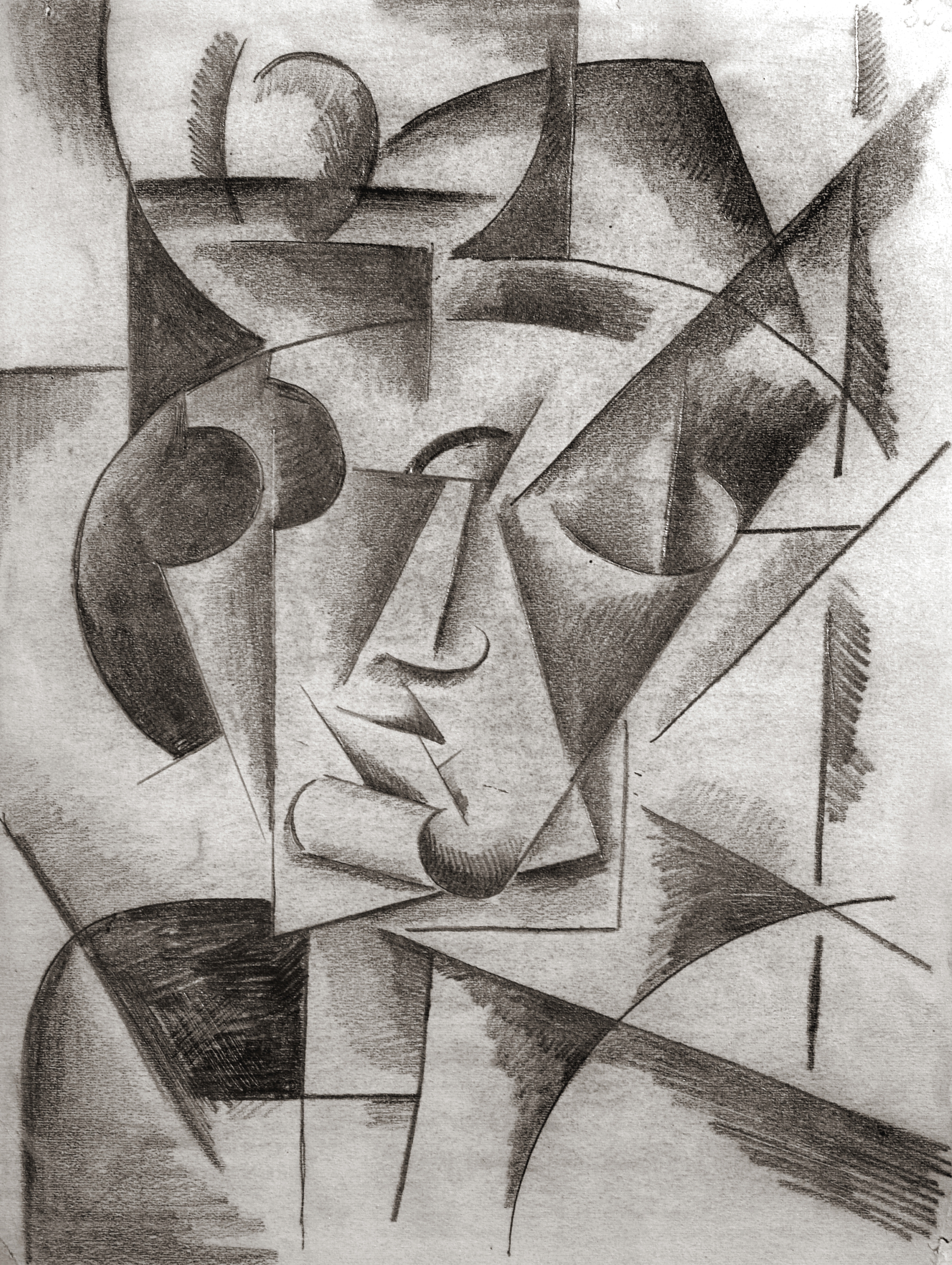
In the 1930s Stalinist Russia, a cadre of artists sought the furthest Southern outpost of the Soviet Union to live and paint with some artistic freedom. These avant garde painters discovered an exotic part of central Asia in which bright color and beautiful intricate designs were commonplace—a far cry from the tightly controlled Socialist Realist message of happy laborers condoned by the government.

Fearing for their lives and livelihoods, the artists either destroyed or hid their vivid paintings in attics, under beds; anywhere out of sight from government eyes. Savitsky, who worked as a painter on a 1950s archaeological dig in Uzbekistan, became aware of the artworks’ existence and began saving what he found. So undervalued were these works that locals referred to him as the ‘garbage man’ who collected the seemingly worthless items. Savitsky’s own unrealized success as a painter motivated him to save what he saw as remarkable representations of this desert land.

"Head" by Lyubov Popova, courtesy of the Savitsky Collection.

Though Savitsky’s primary motivation was his rabid desire to save art, seeing the poverty in which the artists’ families lived moved him to make good on paying them over time, even though he did not know where he would get the money. He literally helped keep people from starving. He fought human suffering and honored his debt to his fellow Russians, all the while doggedly preserving the work and building the Nukus Museum in Karakalpakstan to store and display all of it.

In compiling background about Savitsky, Amanda repeatedly heard about how he helped the artists’ widows who were starving. “He [Savitsky] was beloved and deserves to be honored,” she said with resolve. Savitsky’s zeal was uncompromising and apparently irresistible even to a local government boss who helped direct funds to build the museum housing the works. The irony that the oppressive, controlling government funded the museum was not lost on Amanda. “I am very attracted to projects that seem impossible,” she said. In this way, it seems she and Savitsky (who died in 1984) share similar verve.

"Crimson Autumn" by Ural Tansykbaev, courtesy of the Savitsky Collection.

Not only does the desert climate threaten the Nukus Museum contents today with ever-present oppressive heat and sand storms in remote Karakalpakstan, but a changing political climate in the region also challenges the museum’s purpose. Amanda sees the film’s mission as one way to get the word out about the treasured museum. “It is difficult to get support [for the museum] because no one knows about these artists,” Amanda explained. “It’s challenging to stay in Nukus—it’s not like staying in Paris and studying at the Sorbonne.”

Since its release in 2010, the film, according to Amanda, has been received with enthusiasm and some wonder, given that these unseen works were destined for oblivion. “The film is about recognizing those special cultural treasures that exist all over the world,” Amanda offered thoughtfully.

Filmmakers Amanda Pope and Tchavdar Georgiev on location
In the film Savitsky is quoted as saying, “The art surrounds us like air.” It is the filmmakers’ hope that, just like air, worldwide support will provide the Nukus Museum with the needed oxygen to continue keeping its contents alive, just as Savitsky intended.


Diane Mina Weltman is a BMFI member who enjoys attending performing and visual arts events and writing about them. Check out her blog, A Subject for Consideration.

Monday, April 2, 2012

THE DESTINY OF LESSER ANIMALS: A Life Changed, A Life Improved

If you missed filmmaker Deron Albright and actor/screenwriter Yao B. Nunoo's Q&A after last Tuesday's screening of The Destiny of Lesser Animals, BMFI guest blogger Diane Mina Weltman gives her take on the African crime drama and the Q&A that followed.


The Destiny of Lesser Animals: A Life Changed, A Life Improved
By Diane Mina Weltman, BMFI Guest Blogger

While it proves the premise that two wrongs don’t make a right, the film The Destiny of Lesser Animals offers layered dilemmas among its few characters and draws the audience into events where souls are won and lost by slim ethical decisions.

Set in Ghana, the film follows a police inspector, Boniface Koomsin (played by Yao B. Nunoo), who is desperate to retrieve his stolen passport but is equally uneasy about its counterfeit origins being discovered. (He saved money for ten years to purchase the passport so he could return to the US where he had previously lived.) He decides to report that his gun has been stolen so he can attach himself to an alternate investigation which can lead him to the passport thief.

Ghana’s gritty, dense urban areas and its winding rural towns give the film a colorful, yet dusty ambience in which Koomsin seeks justice and, as with most quests, unearths more about his true intentions in the process.


Director and producer Deron Albright—a St. Joseph’s University faculty member—calls the Philadelphia-area home. He lived in Ghana with his family while he researched and ultimately produced the film. He attended the recent screening at BMFI and fielded audience questions with the film’s star and screenwriter, Yao. The film is Deron’s feature directorial debut, but one of several collaborations with Yao, who recently experienced a very personal debut when he became a new father several days before BMFI's screening.

The Destiny of Lesser Animals filmmaker Deron Albright and actor/writer Yao B. Nunoo posed in the theater after the Q&A

Asked about the process of filmmaking in Ghana, where the friends first met, Deron commented that, “my visions of Africa began with conversations with Yao and it has been an evolution ever since.” Both men sought to create a film that told a universal story and happened to be set in Ghana.

Deron said that he saw The Destiny of Lesser Animals as offering a “refreshing change” from the enormous attention the Kony 2012 video has received. “This film is a preemptive response to the video,” he added thoughtfully. “People are comfortable with a certain narrative with a film about Africa,” Deron noted. “This film moves it in another direction because it is very issue-driven.” The film was “not designed to provide easy answers, but to engender questions.”

Because it was shot on location, each background conveys social messages about poverty and the role of one’s environment. The story also addresses what Deron referred to as Africa’s “brain drain”. As African citizens leave to live and work elsewhere, “it is almost assumed not if you’re going to leave, but when.” The character of Boniface, who had tasted life in the US and even found love there, is fixated on returning. His passion evolves, often painfully, into acceptance as his fierce urge to escape Ghana morphs into a desire to nurture his birth country.

Regarding the issue of national “brain drain,” Yao stated, “It is not something that people consciously talk about, but it’s something that happens.” He added, “When you tell a story you have an obligation to focus it exactly to a message, so we chose the topic and then make subtle mention of others.”

One of actor/writer Yao B. Nunoo's favorite scenes in the film features Xolasie Mawuenyega as a beggar girl.
Asked about their favorite parts in the film, Yao noted the scenes where Boniface and a beggar girl interact. “She is introduced (into the film) at a point that gives you (the audience) a nice breathing space.” Boniface and another officer uncover the violent, merciless path of the thief, and fall short in capturing him. When he faces the beggar girl’s haunting, innocent gaze, it gives him respite from the horror around him and forces him to consider how he can influence this child’s poverty-riddled life for the better.

Deron noted the scenes between Boniface and his uncle, an elderly fisherman (played by Sandy Arkhurst), as his favorite. “I really love his performance in those scenes.” Life’s purpose plays into the conversations between the two men, and one standout exchange ends with the uncle gently reminding Boniface about carefully choosing his direction saying, “As the sun rises and sets, we are meant to grow, not diminish.” These scenes with the uncle provide the film’s conscience as Boniface’s single-minded focus gradually widens. The seaside setting is a visual reminder of the world that lies beyond the Ghana coast, with the ocean’s ebb and flow moderating conversations between a patient uncle and a restless nephew.

Deron expressed his deep gratitude to those who worked on the film, stating, “One of the most heartwarming things is finding a team to work with, and many worked for no pay.” Many local family members and friends attended BMFI’s screening, providing stateside support in full.

Gratified by the consistent warm reception the film has received, Deron is especially pleased with its appeal to all ages in Ghana. “Thirteen and fourteen year olds came to see this film,” he said, “It is a universal story of the character (Yao) trying to do something.” Yao added the film appeals to an essential human yearning, citing, “In Ghana, so many people are hungry for a reflection of self.”


Diane Mina Weltman is a BMFI member who enjoys attending performing and visual arts events and writing about them. Check out her blog, A Subject for Consideration.
Friday, March 2, 2012

Actress Emily Blunt Visits BMFI

Last Tuesday, February 28, BMFI was fortunate enough to host a members-only sneak preview of Salmon Fishing in the Yemen, followed by a Q&A with Emily Blunt, who stars in the film. Unfortunately, not everyone who wanted to attend was able to secure seats, which we truly regret. However, you can get a taste of the delightful Q&A thanks to BMFI member Diane Mina Weltman's thoughtful coverage.


Gone Fishin’—in Yemen?
By Diane Mina Weltman, BMFI Member and Guest Blogger

Three things made BMFI’s screening of Salmon Fishing in the Yemen very special:
1. It was a sneak preview (the film opens nationally March 9);
2. It was free to members;
3. Actress Emily Blunt answered questions after the screening.

It appeared to be an act of movie magic to see the British actress walk down the theater aisle at the film’s end and take a seat next to BMFI President Juliet Goodfriend, ready to field questions. The full house applauded heartily not only for the actress, but for the film in which she stars opposite Ewan McGregor and Kristin Scott Thomas. Ms. Blunt’s visit was a very sweet digestif to the charming comedy.

Actress Emily Blunt signing posters promoting her new film, Salmon Fishing in the Yemen, at BMFI.

Filmed in Morocco, Salmon Fishing pairs a visionary sheik (Amr Waked) and Dr. Alfred Jones (Mr. McGregor), a government fisheries wonk, to introduce salmon spawning in the Middle Eastern country. As the sheik’s PR consultant, Harriet Chetwode Talbot (Ms. Blunt) helps both men as the unlikely project becomes a reality. The film shows what the sheik’s seemingly bottomless wallet and the fishing expert’s understated knowledge can produce when they collaborate on the same dream.


Ms. Blunt explained how her preparation for this role, and others, draws first from the script. “This film is an adaptation from a book and I read about four chapters of it and then I was starting—as brilliant as it was—to find it unhelpful... I’ve done adaptations of books before, and I usually read a bit of the book and put it aside because I think you have to go off of the script more than anything,” she noted. As a teen in England, her acting skills emerged not from formal training but from a broader education that included experiential learning which included sending her to Tanzania to build classrooms. “The experiences I had were more relevant,” she explained. “I don’t have anything to compare with a formal acting education because I am not trained that way.”

On the heels of Meryl Streep’s recent Academy Award win, Ms. Blunt was inevitably asked about working with the famed actress in The Devil Wears Prada. “She’s incredible, generous and warm,” as she recalled her first table read with the cast of that film. “She told Annie [Hathaway] and me that, ‘I think you’re both very good—and that’s the last nice thing I’ll say to either of you.’” Ms. Streep remained in her steely character for the rest of the shoot. “She is lit from within—so authentic,” Ms. Blunt mused.

Emily Blunt and Ewan McGregor star in Lasse Hallström's Salmon Fishing In The Yemen.

In Salmon Fishing, Ms. Blunt enjoyed the depth of her character’s spirit stating,” I admired how conflicted she was and how she persevered because grief can be boring to watch all the time.”

As for what makes her happiest about her job, the young actress explained, “It’s kind of like this Neverland that you exist in for a few weeks [when you’re filming], but really, the people—the actors, the crew—are what I take away from every experience.”

Having worked with some great actors, Ms. Blunt admitted to feeling it was “quite intimidating at first because you feel you have to do your best to keep up with them because they do such extraordinary things in every scene and every moment.” She added that the biggest lesson she’d learned from them is that “they have fantastic confidence, guts and they try something new every time and are open to everything.” She added, “The best actors are interested in life, in people, in soaking you up.”

Ms. Blunt’s warmth filled the theater as she encouraged someone with screenwriting aspirations to persevere even though “this is a most cruel business. What happened to me was incredibly lucky.” She stated earnestly that her agent “reads all scripts that are submitted.” The actress consistently seemed as open as the well-known actors whom she admires, confirming she is always a student, learning from the best.

There is an introspective moment in Salmon Fishing, in which the sheik confirms his unwavering belief in the project not due to an oversized need to spend his wealth, but from a spiritual interpretation of the finer points of casting a fishing line. The sheik, an enterprising angler, sees fishing and faith as cogent means to the same spiritual end when he explains why anyone fishes. “You persist because you are a man of faith; you’re rewarded for your faith with a fish.”

Tuesday night’s audience was not only rewarded with a smart film, but with some unvarnished insights from its leading lady who persists with a very open heart. We were all hooked.


Diane Mina Weltman is a BMFI member who enjoys attending performing and visual arts events and writing about them. Check out her blog, A Subject for Consideration.

Friday, February 24, 2012

Brief and Definitely Sweet: The 2012 Oscar-nominated Animated Shorts

Here at BMFI, we are excited for the Academy Awards! We'll be celebrating in style at our Oscar Party, and in addition to showing many of the nominated features over the past year (including The Artist and The Descendants), the Oscar-nominated animated, live action, and documentary shorts have recently taken our screens by storm. BMFI guest blogger Diane Mina Weltman presents her review of the animated shorts below. If you've seen them, which one will you be rooting for on Oscar night?


Brief and Definitely Sweet
By Diane Mina Weltman, BMFI Guest Blogger

And the Oscar goes to...

That familiar pregnant pause on Oscar night gives viewers one more chance to silently choose the winner before it is revealed. Up until that moment, who will win Best Actor and Actress, Best Director and Best Picture are topics on moviegoers’ tongues for weeks before the Academy Awards ceremony.

But when is the last time you heard someone argue the finer points of what animated short film will capture the golden statue? Thanks to some clever marketing, the likelihood of just such a conversation is greater than ever as Oscar’s lesser known contenders have become more accessible to filmgoers.

Bryn Mawr Film Institute (along with other area art cinemas) is screening three categories of Oscar-nominated films that otherwise would go unnoticed by the general public. Separate screenings of the nominated live action shorts, animated shorts, and documentary shorts are being shown to better acquaint movie fans with these time-condensed genres. ShortsHD opened up this annual screening practice in 2005 and audiences have jumped at the chance to learn more about entries in these genres.
As a film enthusiast, seeing them makes me feel like an Oscar insider.

The animated short films emotionally transported me back to my Saturday-morning-cartoon-filled youth. I watched transfixed at the colorful, whimsical parade of images floating across the screen. The cartoon analogy ended there, however, because these films swim in sophisticated waters. Themes of isolation, hope, the environment, parental expectations, and more are interpreted in broad color spectrums using minimal dialogue.

The notable differences between each animated short film emphasize the endless creative options filmmakers have available today to realize their vision.
"Dimanche/Sunday", directed by Patrick Doyon

Two Canadian entries, "Dimanche/Sunday" and "Wild Life", use the vast Canadian landscape as backdrop to their stories. A young boy and his routine weekly visit with relatives is juxtaposed with a speeding train that literally shakes everything around it as it frequently passes by the sparse homes in "Dimanche". No dialogue is used as the boy’s understated isolation and childhood ennui are bracketed by oversized adults and the overpowering locomotive. Life is moving too fast and loud on the outside while the child’s world reflects a slow, quiet interior. The “T”-shaped feet drawn on every character made me chuckle and created a cartoonish style to the black and white short.

"Wild Life", directed by Amanda Forbis and Wendy Tilby

"Wild Life"’s sweeping vistas of softly colored quilt-like images make up the countryside where a young adventurous man of means sets off to be a gentleman farmer. With an overly romanticized view of his new surroundings, the young dandy is a curiosity to his few rural neighbors as well as a disappointment to his entitled father. He realizes the gravity of his choice as winter approaches and he literally succumbs to its overwhelming power. It reminded me of the 2007 feature film Into the Wild and how an untamed world can crush the most curious of souls.

"A Morning Stroll", directed by Grant Orchard and Sue Goffe

A lone, unsuspecting chicken saunters along the same urban street in 1959, 2009, and 2059 in "A Morning Stroll". While the chicken follows the same path, hops up several steps, pecks on the same front door to gain entrance, nothing is the same around him. The nonplussed capon travels through three vastly different scenarios before he reaches his destination, making this stark short film the most rambunctious of all the contenders. The bird’s journey is short, but each time period presents its own brand of danger and dark forces, giving a pointed view of humanity’s decline over time. The bird reminded me of a much slower, plumper version of the beloved Looney Tunes character, the Road Runner, as things and people explode around him while he casually continues on his way.

"La Luna", Disney’s Pixar Studios offering, presents a child’s wide-eyed wonder as he helps his father and grandfather harness the moon to do some lunar clean up. The threesome climb a ladder into space to sweep up the sparkling glass stars covering the moon. Both men rediscover the magic of their duties as they watch the youngster embrace the enchanted lunar surface. Moonlight and starlight illuminate the human warmth in this sweet, multi-generational tale.

Pixar's "La Luna", directed by Enrico Casarosa

My favorite of the bunch, however, was "The Fantastic Flying Books of Mr. Morris Lessmore". We meet the bookish Mr. Morris as a hurricane-like wind blows him and his book stacks off an iron-railed porch in New Orleans (a Katrina reference perhaps?) and sends him into a world of life-like books. He hesitantly enters a wondrous home library where books dance and play with exuberance and he learns to embrace their whimsy. Books as birds strike the perfect chord as they excitedly flutter when Mr. Morris gives them attention. The film demonstrated for me how we, as readers, are transported by books, if we just allow ourselves to become lifted into their worlds.
"The Fantastic Flying Books of Mr. Morris Lessmore", directed by William Joyce and Brandon Oldenburg

Three additional films titled "Amazonia", "Skylight", and "Nullarbor" rounded out the animated short offerings and added a rich dimension to the whole experience. You can bet I won’t be getting popcorn out of the microwave this Sunday when the Oscar for Best Animated Short Film is about to be presented.

This year I’ll whisper my personal choice, like any other Oscar insider.


Diane Mina Weltman is a BMFI member who enjoys attending performing and visual arts events and writing about them. Check out her blog, A Subject for Consideration.

Friday, February 17, 2012

“The Red Machine” – Breaking Codes, Secrets, Trust

By Diane Mina Weltman, BMFI Guest Blogger

US Navy code breakers sit in a stark, unremarkable room. They mechanically reveal messages from Japanese correspondence using time-tested code-cracking methods. Their precision is abruptly broken when a new code stymies one seasoned operator.

What to do?

This is the opening from which the movie The Red Machine reveals a super-secret spy mission undertaken in Washington, D.C. in 1935.  BMFI screened the deliciously intense film on Saturday, February 11, along with a comical companion short “newsreel”, Gandhi at the Bat. Filmmakers Stephanie Argy and Alec Boehm, appearing with actor Roger Ainslie (Cmdr. Petrie), were all in attendance to answer audience questions.

The Red Machine actor Roger Ainslie and filmmakers Stephanie Argy and Alec Boehm pose with the poster for the spy caper in BMFI's lobby.

Stephanie and Alec brought their enthusiasm for the spy/detective movie genre (along with fun movie swag) and discussed how they concocted the espionage film. Their deep interest in detective-style storytelling began with a book. “We were in New Orleans book shop and came upon The American Magic Codes: Ciphers and the Defeat of Japan,” Stephanie recalled. The US military’s use of a safecracker to steal a book containing Japanese communication codes sparked for them. That idea ignited when they were making the Gandhi short film.

“The actors from Gandhi inspired us and gave face to the story we were trying to shape,” Stephanie said. Based on a short story of the same name by Chet Williamson in a 1983 New Yorker magazine, Gandhi is a supposedly secret newsreel about the peacemaker’s 1933 visit to the US in which he attends a Yankees vs. A’s baseball game. The hilarious writing was brought to life in part through the authentic-looking visual effects that Stephanie and Alec created.

Lt. F. Ellis Coburn (Lee Perkins) and Eddie Doyle (Donal Thoms-Capello) 

Petite and wearing a t-shirt with the word ‘SPY’ on it, Stephanie explained that she and her partner look at spy themes for the fun challenges they present for the audience and themselves. “We’re drawn to pulp, spy, and thief storylines for the intrigue everyone experiences.” Intrigue fills each scene of The Red Machine, as the plot crescendos. A naval officer and safecracker are paired to secure a Japanese code book locked away in a US embassy. Their unlikely match seems questionable, until they discover others’ secret agendas.

The Red Machine’s title is based on the names US Navy code breakers would give to the machines they worked to easily identify country and code origins. “We tried to get a photograph of the real Red Machine,” Stephanie added. The request for a photo from the NSA reaped no bounty, so they looked at lots of photos of cipher machines and collaborated with their prop master to build what they thought it might look like. However, two years later they found one such photo on the NSA website. “We asked the wrong question,” she laughingly added. ”The machine was always there, but we literally asked for a photo of it. The right question would have been, 'Can you take a photo of it and send it to us?’”

Literal translations aside, the device created for the film was seen by Stephanie and Alec as the vehicle to set the characters in motion. “The idea of this machine was as a sort of precursor to what eventually would become the computer,” Stephanie noted.

The couple’s teamwork continued in post-production with Stephanie working as the primary editor, and Alec as sound editor. To maintain objectivity, they followed advice from a colleague who understood the pitfalls of working on a project with a partner. “A friend suggested that we remember to keep a pair of fresh eyes on each step,” Stephanie recalled. Stephanie would edit the film and Alec was the ‘fresh eyes’ to her choices. Likewise, after Alec did sound editing, Stephanie offered her opinions.

Eddie (Thoms-Capello) puts his skills to work in The Red Machine

As for their unintended code used to describe how they felt about the difficulty of their projects on a given day, they used The New York Times crossword day of the week as their opinion shorthand. Stephanie explained, “You know, Monday puzzles are usually the easiest ones, and by Friday, they’ve grown substantially more difficult. So we would say something like ‘this looks like a Tuesday,’ to communicate how close to the mark something was.” I thought their use of daily puzzle appearance was the perfect tool for filmmakers who are so taken with clever mystery.

Asked about the challenges they faced in making the self-financed film, Alec (a possible doppelganger for actor Phillip Seymour Hoffman) used the analogy of a mine car. “Keeping the mine car on the rails in the mine shaft as much as possible was, by far, the biggest challenge for me,” he said adding “there are so many factors that can push you off course.”

Stephanie’s reply was introspective: “Saying our goodbyes.” She added, “Once the script was done, it was sad but we knew we had to cast the film so that made me happy.” The cycle of one piece ending and one beginning juggled the sadness and joy throughout until the film’s eventual completion. The couple’s mix of practical and intangible reflections reminded me, an avid movie goer, that the human factor behind the movie magic is always present on and off the screen.
Some props and a costume from The Red Machine were on display in the atrium.
There were a lot of bean dishes (inexpensive protein) on the prop menu used for a scene in a Depression-era diner!

Stephanie’s closing remarks regarding the choice of the film’s time period offered a deeper glimpse into the couple’s purposeful approach to films. “Looking back on those times, we know they were very rough,” she shared, noting the Depression years and early events in pre-WWII Europe. “It’s our way of saying we got through those times and can get through these as well.”

Diane Mina Weltman is a BMFI member who enjoys attending performing and visual arts events and writing about them. Check out her blog, A Subject for Consideration.

Tuesday, February 7, 2012

Dangerous: The Method or the Men?

BMFI guest blogger Diane Mina Weltman attended a screening of A Dangerous Method and BMFI's "Inside the Characters" monthly discussion group, hosted by the Psychoanalytic Center of Philadelphia, this past Sunday. Read her thoughts about the film's portrayal of Jung, the post-movie chat, and more below.  


Dangerous: The Method or the Men?
By Diane Mina Weltman, BMFI Member and Guest Blogger

Overstepping the slender line that separates the doctor/patient relationship is one of the most dangerous decisions a health professional can make—at least that was the consensus reached by moviegoers discussing the film A Dangerous Method following a Sunday afternoon screening during its recent opening weekend at Bryn Mawr Film Institute.

An alternative event to the Super Bowl, some 20 or so filmgoers joined Dr. John Frank of the Psychoanalytic Center of Philadelphia to talk about their impressions regarding the film's characters as part of BMFI’s "Inside the Characters" forum. The guided discussion, offered monthly at BMFI, opens an opportunity to answer the timely post-movie question, "What did you think?" or, more specifically, "What did you think of the characters?"

Michael Fassbender and Viggo Mortensen play Carl Jung
and Sigmund Freud in David Cronenberg's new drama,
A DANGEROUS METHOD

The discussion initially focused on the expanded view of Sigmund Freud and Carl Jung as two of the film's trio of main characters during a period where they collided on their professional journeys. The film looks at how these forces of psychoanalysis navigated their work and relationship with each other, as well as how they formulated and employed the 'talking method' of treatment. The discussion was equally rich and uncomfortable as moviegoers wrestled with the way these men’s personalities and practices collide in their search to understand the human psyche.

Today, using talking as a way of emotionally healing is the predominant path taken in psychoanalysis. At the turn of the 20th century, this method was in its infancy. Its use (and abuse) provided the basis of one of the film's troubling themes.

Jung (Michael Fassbender) successfully treats a young female patient whose consuming hysteria blasts the movie's first scene wide open. The patient, Sabina Spielrein (Keira Knightly) responds exceedingly well to the talking method of treatment. It not only reduces both her uncontrolled bouts of fear and the sexual arousal they ignite, but opens the door for her intuitive intelligence to emerge.

Keira Knightly plays Jung's patient, Sabina Spielrein.

Audience members seemed to appreciate the defined success of the married Jung's care for his patient until his suppressed sexual needs supersede Spielrein's treatment. Spielrein's portrayal as the one who initiates the physical relationship with Jung did not sway the discussion participants from the overriding concern about the damage done when a patient/doctor relationship breaks the bond of appropriateness. Said one participant, "This goes to the basis of aberrant behavior and abuses any trust between the two." The group seemed unanimous in demanding that, as the professional, the doctor’s role in protecting that trust was paramount.

In the post-movie chat, other participants whose professional life is/was in social work or mental health also took pointed exception to Jung's breach of conduct. One woman explained, "We'd be in a terrible state if everyone did whatever they wanted." Added another, "Jung goes directly against keeping the necessary boundaries of the doctor/patient relationship." The film's presentation of this taboo behavior tainted Jung's professional achievements for many in the discussion.

In the film, psychologist Otto Gross (Vincent Cassel) represents uninhibited expression and freedom to the extreme. Gross described a patient's desire for the same freedom to both have an affair with her doctor and to commit suicide as a consistent expression that should not be "cured." "Freedom is freedom," he quips much to the audience and Jung's disdain. The audience was as critical of his character as they were of Jung’s malfeasance. One participant noted, "He was a horror."

[Spoiler alert] The character of Sabina Spielrein was interesting because of how she seeks answers while remaining acutely aware of her scarred past. "I give Sabina credit," one male participant stated, noting that she benefits from Jung's initial treatment and unhappily moves beyond their sexual relationship to "ultimately succeed in getting better and living a very productive life." The contrast from this woman's uncontrollable breakdown at the outset to her resounding intellectual achievements received appreciation from some—but not all—in the group.

Another woman noted, "Sabina was never really cured, even though she achieved a great deal in her field." This led to a discussion regarding how much does one need to be healed to live a productive life. As discussion leader, Dr. Frank added, "Sabina was seen as someone history cast aside early on, but her work in the new area of child psychology was eventually recognized as groundbreaking."

Viggo Mortensen's Freud fills the
role of a substitute father for the conflicted Jung.

Freud's (Viggo Mortensen) influence as father figure to Jung and to the psychoanalytic movement in Europe received notable emphasis in the film and also with the discussion participants. Said one woman, "The film supported the view that Freud and Jung were smart men but when it came to their personal relationship, Jung struggled with having Freud as a substitute father."

Spielrein's deeply rooted humiliation at the hands of her biological father also influenced how she saw both Jung and Freud. "Each character was traumatized in some way by the other," added one gentleman. "The father-figure role impacted all their lives."

Delving inside the film's characters with other moviegoers added a dimension to the movie experience that mirrored its intent—by talking through our impressions of the film's players, we not only had our say but had to consider how others saw them. The power of talk, whether as a psychoanalytic tool or vehicle for discussion, gives us all a chance to be heard.

Upon exiting A Dangerous Method, I reflected that the film’s title was somewhat misleading since 'the method' was not necessarily dangerous. The danger lay with how Jung, Freud, and Gross chose to use it, reminding me that sometimes the disease seeps into the cure.


Diane Mina Weltman is a BMFI member who enjoys attending performing and visual arts events and writing about them. Check out her blog, A Subject for Consideration.