Showing posts with label Devin Wachs. Show all posts

Tuesday, October 29, 2013

Halloween Costumes for Film Fans: BMFI Favorites

By Devin Wachs, Communications Manager, BMFI

Actors get to transform their look regularly as part of their jobs, but Halloween is one of the few times when the rest of us are encouraged to dress up in crazy costumes. Why should the actors get all of the fun? At BMFI we love it when our guests wear costumes, as fans of our sing-along screenings know. In celebration of the spooky holiday, if you wear a costume to see a movie at BMFI this Halloween, you’ll get a free small popcorn!

If you needed some inspiration getting your last-minute costumes together, here are some of our staff’s favorite movie-themed costumes:
Andrew J. Douglas, Ph.D., Director of Education
It’s always fun to see people who’ve taken the time, and have the creativity, to create a costume based on popular movie characters. Who among us men of a certain age never dressed up as Han Solo for Halloween, for example? When the “casting” is right, and the costume is spot on, it can make for a wonderful treat this time of year. However, there is one thing better: When a person uses that time and creativity to make a great costume based on a supporting, or lesser-known, character from a film (blockbuster or no). For example, it never would have occurred to me, in a million years, to base my Halloween costume on Les Grossman, the sleazy producer in Tropic Thunder, played by Tom Cruise in a stunningly hilarious barely-more-than-a-cameo, but I have all the appreciation in the world for this guy who did.

Maxwell Gessner's Les Grossman costume was so perfect, it took home a prize in the 2010 Tom Cruise Halloween Costume Contest run by TomCruise.com, Cruise's official blog.

Valerie Temple, Programming Manager
I'm not into preplanning for Halloween—I usually just whip up a costume by throwing together items that I already own. Of course, I'm the kind of person who happens to have a pair of old-school roller skates and a selection of ‘70s loungewear in her closet. Pop on a blond wig and you've got the perfect Rollergirl (Heather Graham) from Boogie Nights!


Heather Graham played Rollergirl in Boogie Nights. If you have gold lame pants and skates, this costume is an easy one to replicate.

Patricia Wesley, Director of Development and Communications
Main Line thrift shops are my favorite place to shop for Halloween costume materials. A heavily beaded dress from the ’80s plus a fake fur, all the pearls you can find, and an hour with some scissors, and you are ready to go as Daisy from The Great Gatsby. Elbow-length gloves are usually available for a few dollars (you might even find kid gloves). Add a cigarette holder and a beaded cigarette case! Best of all, as Daisy, you have a license to have a great time!

Carey Mulligan dripped in diamonds and pearls as Daisy Buchanan in Baz Luhrmann's 2013 version of The Great Gatsby.

Kerri Grogan, Staff Assistant
What I love to see in any costume, not just one for Halloween, is creativity. This costume, make-up job, and prop design was created by Rayce Bird on the reality show Face Off, for a Tim Burton-themed challenge. I think it’s breathtaking. The concept is packed with emotion: it’s all about a musician’s passion for music and for her instrument. It’s also a beautiful interpretation of Tim Burton’s signature visual style and an homage to the emotion he puts into his characters.

Artist Rayce Bird created this beautiful costume, inspired by Tim Burton's work, for the television show Face Off.
For my part, an easy and fun costume for a couple would be the young runaways from Moonrise Kingdom. For Suzy (Kara Hayward), you would need a pink above-the-knee dress, white knee socks, and a pair of binoculars. Pull your hair half-back in a clip and amp up your eye shadow. For Sam (Jared Gilman), you'd need a scout’s uniform (or a similar khaki shirt and shorts) with a yellow kerchief, glasses, and a coonskin cap. A canteen and a pop-gun would make great props. And voila!

Dressing as the young lovers in Wes Anderson's Moonrise Kingdom would make for a fun pair of costumes.
We hope to see you in costume on Thursday, and happy Halloween!

What are some of your favorite movie-related costume ideas? Tell us in the comments below.


Devin Wachs is the Communications Manager for Bryn Mawr Film Institute. She joined BMFI's staff in 2005, following her graduation from Bryn Mawr College. If you send BMFI a message on Facebook or Twitter or are interested in onscreen sponsorships, she's the one who'll be in touch!

Tuesday, June 18, 2013

Harold Lloyd: A Legacy

By Devin Wachs, Public Relations Manager, BMFI

This is the second part of a two-part interview with Harold Lloyd's granddaughter, Suzanne Lloyd, in honor of Bryn Mawr Film Institute's screening of Safety Last! on June 25. Read the first part here.

Harold Lloyd keeps his granddaughter Suzanne quite busy. As the caretaker for his collection, she is responsible for preserving one of the largest private film libraries in the world and introducing the silent comedy legend to new audiences. Her grandfather’s film library gets around so much, in fact, that she laughingly calls the collection “Harold”, as if it is a person, “because ‘he’ is so busy.” (She lovingly refers to the man himself as “Dad”.)


Harold Lloyd dangles above the street below in this iconic scene from Safety Last!, a new restoration of which recently screened at the Cannes Film Festival and will be featured at Bryn Mawr Film Institute on June 25.
It has indeed been a busy few months. After taking “Harold” to the Cannes Film Festival for an oceanfront screening of the new restoration of Safety Last!—showing at Bryn Mawr Film Institute on June 25—they were off to England to oversee the recording of composer Carl Davis’s new scores for The Freshman and High and Dizzy with the Birmingham Symphony Orchestra. Recently, home viewers also enjoyed fifteen newly restored Harold Lloyd shorts on Turner Classic Movies, co-hosted by Suzanne.

A Grandfather’s Gifts

Suzanne was granted a very special view into classic Hollywood from a young age. She was raised at Greenacres, her grandparents’ estate in Beverly Hills, where she was neighbors with the likes of Cary Grant and schoolmates with the daughters of Jimmy Stewart, William Wellman, and Randolph Scott.

“One of [my grandfather’s] dearest friends was Doug Fairbanks—his best friend—and Mary Pickford was one of my grandmother’s best friends. I used to go to see ‘Aunt Mary’ all the time. She had great cookies, nice dogs. Colleen Moore was my godmother. I had no idea who they were. You just accept them as your grandparents’ friends. I got a clue who Walt Disney was when I was older. He had a train in his backyard, and when we went to Disneyland, I put it together that it was named for the same guy with the train.”

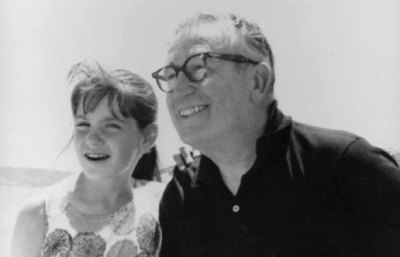
Suzanne Lloyd with her grandfather, Harold.
Suzanne knew her grandfather first and foremost as a photographer, philanthropist, and technology enthusiast. She remembers when, as a child, they visited Charlie Chaplin at his house in Switzerland. “They said that he worked in the same business that Dad did, but I thought that meant running hospitals, or taking pictures. I didn't realize who he was.”

When Harold passed away in 1971, Suzanne was only nineteen-and-a-half years old, but she was entrusted with the task of protecting his legacy and managing his film library, a responsibility for which Harold had been unofficially grooming her for years.

“It was a real privilege. But I worked on the films with him before he died and I really knew them. I used to go lectures with him. I went to the opening of the American Film Institute. When about fifteen, I started I started working on the films with him at the house with a couple of film students.

“My first job was to clean, rewrap, and air out nitrate film. Have you ever smelled nitrate film? It’s not fun. Dad said, ‘This is a good way to break you in. Film isn’t fun, it’s hard work. You need to know the elements of film before you can do more.’”

He arranged for Suzanne to take film classes at USC when she was just a senior in high school. Although Harold had retired in 1947, before Suzanne was born, if friends were shooting a movie, he’d take her to visit the sets.

“Robert Wise was shooting Star at Fox. I’d just broken my leg—it was a bad break. I couldn’t go to school. Dad called him up and said, ‘Listen, Bob, I’m trying to give Sue an overview of stuff, but I’m not on set anymore.’ So I went down to the set and they put me in one of the director’s chairs every day while they worked. I put my leg up; the grips just moved the chair around. For two or three weeks, I just sat there, every day. ‘Just sit there, take notes,’ they told me.” She did.

Passing the Torch

“He was very good about passing on torches and helping others. He started a lot of people’s careers,” Suzanne recalls. Jack Lemmon’s son, Chris, was born in Harold’s beach house, where Harold let Jack and his wife live while Jack was starting out as an actor. Robert Wagner was introduced to Harold through Suzanne’s mom, and he became close with the Lloyd family. “Dad said, ‘Well, maybe we’d better get you an agent.’ That led to his first job.”

And those young film students that worked with Suzanne to help Harold archive his films? “They were Rich Correll—the son of Charles Correll, who played Andy in Amos and Andy—and David Nowell, who’s now one of the top aerial cinematographers in the world. Richard is one of the creators of Hannah Montana. He did the restorations on the new shorts for Turner Classic Movies, and he still has me rewinding the film and marking the positions. I never seem to have gotten out of that!” Suzanne reflects with a hearty laugh.

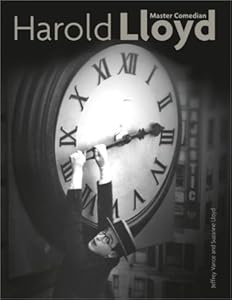
In the decades since Suzanne has assumed responsibility for preserving Harold Lloyd’s film library, she has introduced his work to new audiences in numerous ways. In addition to presenting his newly restored films at festivals worldwide and on Turner Classic Movies, she also co-authored the 2002 book Harold Lloyd: Master Comedian, has compiled two books of his 3-D photographs, and was the executive producer for the Emmy-nominated British documentary, Harold Lloyd: The Third Genius.

“It’s Harold’s Job”

I asked Suzanne what has surprised her most about Harold over the years, and if there were things that she is still learning about him through his working with his films.

“I had to really learn to do public speaking when I was young. The first time I went out to introduce the films I was nervous. This archivist who had worked on them said, ‘Speak from your heart. Just remember, the moment that Harold gets up there, it’s Harold’s job. He knows what to do, he’s always known what to do.’ The laughter and reactions to his films are just amazing, year after year. I wish I could have been there in the beginning, but they are so consistent, I bet it’s the same as it is now. You need to see his films with an audience. People who have never seen them come out saying, ‘Why haven’t we seen him? Where has he been?’ That just thrills me and amazes me every time.”

Thanks to Suzanne’s work, the laughs will keep coming and new audiences will continue to be able to discover “Harold”, both the man and his film legacy, for a long time to come.

See the 90th anniversary digital restoration of Safety Last! at Bryn Mawr Film Institute on June 25.


Devin Wachs is the Public Relations Manager for Bryn Mawr Film Institute. She joined BMFI in 2005, following her graduation from Bryn Mawr College. If you send BMFI a message on Facebook or Twitter or are interested in onscreen sponsorships, she's the one who will be in touch!

Tuesday, June 11, 2013

Harold Lloyd: The Grand Prince of Cinema

By Devin Wachs, Public Relations Manager, BMFI

This is the first part of a two-part interview with Harold Lloyd's granddaughter, Suzanne Lloyd, in honor of Bryn Mawr Film Institute's screening of Safety Last! on June 25.
Film comedian extraordinaire Harold Lloyd returned to the Cannes Film Festival this year, thanks to a brand-new digital restoration of his hit 1923 comedy, Safety Last!

“The 2k restoration is just gorgeous. I’ve seen it on the big screen, and once you’ve seen it on the huge screen, it’s amazing. It’s incredible,” his granddaughter, Suzanne Lloyd, enthuses.

Bryn Mawr Film Institute is among the theaters featuring the new restoration of Safety Last! The film, which just celebrated its 90th anniversary, will also be released on Blu-Ray through The Criterion Collection. Even as she was preparing to leave for Cannes later that day, Suzanne generously gave her time for a phone interview from her home in Los Angeles.

It’s not the first time she’s accompanied the silent film legend to Cannes. “He actually took me to Cannes when he won in 1962. I went with my grandmother, my mother, and his assistant, Roy Brooks.” Harold lit the festival on fire that year when he presented a compilation of some of his best work, Harold Lloyd’s World of Comedy, and was honored with a plaque that read “To the Grand Prince of Cinema.”

The King of Daredevil Comedy

Harold Lloyd started in Hollywood by sneaking onto the Universal lot, where he struck up a friendship with producer Hal Roach. For Roach’s production company, Harold created a variety of characters reminiscent of Chaplin’s Little Tramp. His one-reel comedies soon became two-reelers after he developed his own “glasses” character, an everyman romantic lead and boy-next-door that audiences loved.

Safety Last!, one of the “thrill comedies” Harold made, was a turning point in his career and contains one of the most iconic images in silent cinema: Harold dangling from the face of a giant clock high over the street below. In the 1923 feature, Harold plays a hard-working everyman who ends up climbing the side of a skyscraper as part of a marketing stunt in order to make his girlfriend think he’s a successful businessman.

The film was a big hit, and Harold Lloyd was named the “King of Daredevil Comedy.” Following on its heels were Lloyd's features The Freshman (1925), The Kid Brother (1927), and Speedy (1928), making him the number one box office star two years in a row in the late ‘20s.


In Safety Last!, Harold plays a department store salesclerk pretending to make it big in order to impress his girlfriend.

Being Funny is a Serious Business

Suzanne’s grandmother, Mildred, played Harold’s love interest in Safety Last! The onscreen couple was courting during production.

“Right before the movie was released, my grandparents got married,” Suzanne states. “Well, it was the last film that she ever made with him, because he wasn’t going to play with his married wife in movies. He didn’t think it was that funny—he was supposed to be the bachelor chasing the girl. That’s when Jobyna Ralston stepped in to be his leading lady. But my grandparents had really good chemistry together and [my grandmother] adored him. They were married for 49 years. She was nineteen when she started with him; she was with him when he had his bomb accident.”


Mildred Davis and Harold Lloyd in a promotional image for A Sailor Made Man (1921). They starred in several films together before they were married in 1923.

At a promotional photo shoot at Hal Roach’s studio in 1919, Harold was supposed to light a cigarette with a fake prop bomb. The bomb went off in Harold’s hand, blinding him and blowing off part of his right hand. His career was said to be over.

“Who put the bomb there?” Suzanne queries. “He was working on his third film with my grandmother, Mildred, and this happens. It was absolutely killing.”

Douglas Fairbanks, Harold’s best friend, came to visit Harold and offered him a place at his studio, United Artists. But Harold refused: “You have your comedian.” (Charlie Chaplin was one of the studio founders.) Douglas asked him what he was going to do, and Harold replied, “I’m going to wait and see and think positive. They think my eyes can come back.”

Lo and behold, in a few months, sight had returned in both eyes and his face had started to heal.

Suzanne reflects, “He was just a driven person and he was so enthusiastic about life and such a positive thinker—Why Worry? is actually the name of one of his films. He believed that you have to be positive and things will work out.”

He didn’t let the accident slow him down, and he kept his scars from the public.


Harold Lloyd was known for performing his own stunts in "thrill comedies".
His films grossed more than Charlie Chaplin's or Buster Keaton's.

“They had several movies ready for release,” Suzanne explains. “He said, ‘I don’t want people to come in there and look for my handicap or disability. Just hold the movies back. Instead of putting the movies out every two weeks, hold them back so I’m not dropped from the screen.’” Roach had a thin flesh-colored glove made in New York to cover the injury. Harold went back to work nine months later, but wore the glove in every movie he made after the accident.

“People really didn’t know in the public,” Suzanne continues. “He learned to do autographs with his left hand. He’d keep his hand in his pocket at premieres and things. He’d shake with his left hand; if he really knew you and you were a good friend of his, he’d give you his right hand. He was always athletic and always played handball. He played handball even with his bad hand, to build up strength.”

So when Harold was dangling from the clock face in Safety Last!, only a few years later, he was performing the daredevil stunt with only one complete hand.

A Modern Visionary

By the time he retired from the screen in 1947, Harold Lloyd had made 200 films. But retirement didn’t mean “rest” for the go-getter. He devoted himself to the Shriner Hospitals for Children and, in the 1960s, he was named President and Chairman of the Board. Always fascinated by photography, he was an avid 3-D photographer and an early proponent of the idea of using 3-D in films. His photography library contains nearly 300,000 stereo slides he made from 1947 to 1971.

“He was just a real visionary and a pioneer,” Suzanne says. “He was controlling about his films to the point where he didn’t want them put on television where an editor would hack them up for commercials [and ruin the pacing]. A number of generations lost out because he didn’t want to do that. In some ways, Harold is behind in recognition compared to Chaplin or Keaton.

“But if you play a Harold Lloyd film, he‘s more modern,” she continues. “He’s not in a character. He’s your Tom Hanks, your Jimmy Stewart, your Jack Lemmon, maybe your Jason Bateman. He’s your guy on the street. He’s always smiling, he’s always moving. He’s always getting into trouble and getting out of trouble… He set the template for romantic comedy.”

The 90th anniversary digital restoration of Safety Last! will be showing at Bryn Mawr Film Institute on Tuesday, June 25.

Devin Wachs is the Public Relations Manager for Bryn Mawr Film Institute. She joined BMFI in 2005, following her graduation from Bryn Mawr College. If you send BMFI a message on Facebook or Twitter or are interested in onscreen sponsorships, she's the one who will be in touch!

Friday, May 31, 2013

Summer Classics: BMFI Staff Picks

By Devin Wachs, Public Relations Manager, BMFI 

Our annual Summer Classics series of repertory favorites from Hollywood and beyond begins next week, Tuesday, June 4, with the original King Kong. All summer long, we’ll be featuring vintage and recent classics on the big screen, with film series celebrating iconic filmmakers Alfred Hitchcock and David Lean, three new sing-alongs, the new 90th anniversary DCP restoration of Harold Lloyd’s silent comedy Safety Last!, and one night Summer Classic Seminars on Back to the Future and Brief Encounter. In addition, for the first time we’re featuring family films on Saturday mornings all summer long, including a month of the Marx Brothers!

We asked some of our staff to tell us what they're most looking forward to seeing at BMFI this summer. Do you agree? What are you excited to see?

Little Shop of Horrors Sing-along – Wednesday, June 12, 7:00 pm
Chosen by Kerri Grogan, Staff Assistant

I don't know about you, but I make it a habit to sing along with every musical I know, every time I watch them. And what's more fun than a campy musical about carnivorous alien plants? Answer: watching campy musicals about carnivorous alien plants on a big screen...and singing along with everyone in the theater. It sounds like it's gonna be a blast.

Sing along with Rick Moranis, who plays Seymour, the caretaker to the floral menace known as Audrey II in Little Shop of Horrors.

Safety Last! – Tuesday, June 25, 7:00 pm
Chosen by Andrew J. Douglas, Ph.D., Director of Education

I’m very much looking forward to Safety Last! (1923) because though it’s Harold Lloyd’s most famous film, it really hasn’t been seen by a large segment of the contemporary audience, and this style of daring, physical comedy—similarly performed by Lloyd’s (even) more famous peers, Buster Keaton, Charlie Chaplin, and Roscoe “Fatty” Arbuckle—is a lost art that needs to be preserved, and enjoyed, through theatrical screenings like this one. Also, I think, not unlike “Rosebud,” far more people know the image of a man dangling from a clock, (apparently) high above a city street, than have actually seen the film from which it originates, and I like that people who come to see the film will be reminded of that connection—or make it for the first time.

Harold Lloyd hangs precariously from the clock of a New York skyscraper in Safety Last!

Back to the Future - Tuesday, July 2
Film at 7:00 pm
Summer Classics Seminar at 6:30 pm
Chosen by Valerie Temple, Programming Manager

I'm teaching a Summer Classics Seminar on Back to the Future, but that's only part of the reason I'm looking forward to seeing the time travelling adventure on the big screen. Even though I've seen this particular film approximately 192 times (at least), I've never had the pleasure of seeing it on the big screen. Finally, I'll get to see that souped up DeLorean zooming across a screen larger than my TV! I am worried that I'll disturb the other patrons as I know the dialogue by heart and can't help but quote along with the movie. So, if you come to the screening and I'm making too much of a ruckus, don't hesitate to tell me to "make like a tree and get out of there!"

Great Scott! Christopher Lloyd and Michael J. Fox are perfectly cast in Back to the Future.

Brief Encounter - Tuesday, August 13
Film at 7:00 pm
Summer Classics Seminar at 6:30 pm

Chosen by Pat Wesley, Director of Development and Communications

I am not sure which pairing is less likely: two thirty-something, properly married (to others) war-time Brits or David Lean and Noël Coward. I do know the result is a wistful, tender Brief Encounter and I can’t wait to get lost again in the foggy heartbreak of it all.

Celia Johnson, boarding a train, shares a poignant look with Trevor Howard in Brief Encounter

Heavyweights – Saturday, August 17, 11:00 am
Chosen by Andrew J. Douglas, Ph.D., Director of Education

I’ve never seen Heavyweights, but I’m very much looking forward to completing the trilogy of Ben Stiller-as-extremely-fit-but-dumb-as-a-bag-of-hammers-guy films that also includes Zoolander (2001) and Dodgeball (2004). Given the Disney branding and family-friendly elements of this film, I’m not expecting for the hilarity to be quite as ribald as it was in those films, but on the other hand, with co-writer/executive producer Judd Apatow (The 40-Year-Old Virgin) behind the scenes, and comic talents like Paul Feig (director of Bridesmaids), Kenan Thompson (Saturday Night Live), Jeffrey Tambor (Arrested Development), and comedy duo Jerry Stiller and Anne Meara on screen, I don’t think I’ll be disappointed.

Ben Stiller stars in Heavyweights as the insane (and insanely strict) fitness coach at Camp Hope.


For my part, although many of these films are personal favorites, I am particularly excited to bring a recent delight back to BMFI: Magic Camp, which we'll be showing on Monday, July 15 at 1:15 pm. If you missed our Pennsylvania Premiere of the film in December, this is your chance to see this charming documentary about Tannen's Magic Camp on the big screen again, with the added bonus of a Q&A with director Judd Ehrlich and performances by professional magicians who are instructors at the camp. Plus, it was filmed a few blocks away at Bryn Mawr College, where the camp meets!

Meet Magic Camp filmmaker Judd Ehrlich and campers and instructors from Tannen's Magic Camp at BMFI's encore of this fun documentary.

You can explore all of our films and upcoming events, watch trailers, and buy tickets at BrynMawrFilm.org, or look at the latest issue of Projections, our program guide.


Devin Wachs is the Public Relations Manager for Bryn Mawr Film Institute. She joined BMFI in 2005, following her graduation from Bryn Mawr College. If you send BMFI a message on Facebook or Twitter or are interested in onscreen sponsorships, she's the one who'll be in touch!

Thursday, April 25, 2013

Meet Our New Staff Assistant

By Devin Wachs, Public Relations Manager, BMFI

This week, Bryn Mawr Film Institute welcomed the newest member of its staff: Kerri Grogan, our new Staff Assistant. An animator who customers at Merion Art and Repro already know and love for her sunny disposition and can-do attitude, she will be supporting BMFI’s education, outreach, programming, and public relations initiatives. You’ll also be hearing more from her here, on BMFInsights.
Tell us a little about yourself.  
I'm an animator, artist, crafter, and blogger [MotionSavvy] from North Carolina. I went to college in Maryland and several years later moved to Delaware County, Pennsylvania. I love movies—not just animated ones—and storytelling is something I'm very passionate about. Also, I tend to be a huge nerd about many a thing.
You studied animation. Do you have a favorite animator or character?  
There are a few. I really admire Tomm Moore (director, The Secret of Kells) and Glen Keane (character animator, The Little Mermaid, Beauty and the Beast) for their talent and their vision. I think every hand-drawn animator has to at least mention Miyazaki as well. But my absolute favorite animator is probably Don Bluth (director, The Secret of NIMH, Anastasia, others). Not specifically because I think his movies are the absolute best thing out there—although it's true that he can singlehandedly be blamed for my life-long love of dinosaurs, and I do think The Secret of NIMH, especially, is a truly great movie—but because he's so passionate about the medium.
What is your favorite film? Why do you love it?  
Spirited Away. I think part of my love for it is personal and nostalgic, but it's also true that everything about this movie is beautiful and incredibly well paced and put together.
What is your all-time favorite cinema experience?  
When I was in college, part of my final animation coursework was to complete my own short animated film. I worked on my project for the duration of the school year, from concept to completion, and when it was finally ready—after many long and sleepless nights—my class presented all of the work as a senior show in the large campus theater. The films were really incredible...my classmates were (and still are!) extremely talented. When I saw the title of my piece on the screen, I gasped. Seriously, my jaw dropped. I covered my mouth and watched in silence, my hands shaking. I think I might've teared up a bit when I saw my name in the credits. When you create something, you can look at it a million times during the process and be analytical about it. But even when you know it has problems, and you can see all of those problems while you watch the final cut, there's nothing quite like watching something you've slaved, anguished, and angsted over on the big screen. It's really powerful.
If you see Kerri upon your next visit to BMFI, please welcome her!

Wednesday, March 27, 2013

The Female Gaze: Alice Neel and Women Artists Who Inspire

By Devin Wachs, Public Relations Manager

In honor of tomorrow's screening of Alice Neel, a documentary about the esteemed 20th century painter known for her expressive oil portraits, we asked audience members who their favorite female artist was and why. A number were fans of Neel's work, which you can currently see on display in the show The Female Gaze: Women Artists Making Their World at the Pennsylvania Academy of the Fine Arts (PAFA).

Here are our favorite responses:
"My favorite female artist is Mary Cassatt. I've always loved her paintings of children--playing at shore, little girl in a straw hat, little girl in a chair. The paintings are lovely and peaceful. Love her use of color and how her paintings make me feel.
I grew up in Augusta, GA. Now I live in Berwyn and exercise at the Upper Main Line Y--[located in] the Cassatt mansion. Life is surprising." - Joan Coney

Little Girl in a Blue Armchair, 1878 (oil on canvas) by Mary Stevenson Cassatt (1844-1926)
"Alice Neel is my very favorite female artist and I am very fortunate to own one of her still lifes. I met her a year before she died and she showed an interest in doing my portrait but became ill so it never happened. Her art speaks to me with an expressiveness that very few other artists show." - Shirley L. Kurland
"There is no question... Alice Neel is my favorite female artist. Any woman who will paint a nude portrait of herself in her seventies when her bod badly needs ironing has my vote!" - Jean Homeier

Alice Neel at work in the documentary Alice Neel, showing at BMFI this week.
"Georgia O'Keeffe lived a life that we all wish we had the courage to live, forging a path for strong women to be able to follow their hearts rather than the predicable road that society has paved." - Jocelyn Grover

Thanks to everyone who responded and congratulations to Joan Coney, who won two tickets to tomorrow's screening for being the first one to reply! We hope that you'll join her to learn more about Alice Neel's work and her unconventional life. PAFA's Senior Curator Robert Cozzolino will introduce the film.

Which female artists inspire you? Tell us in the comments below.


Devin Wachs is the Public Relations Manager for Bryn Mawr Film Institute. She joined BMFI in 2005, following her graduation from Bryn Mawr College. If you send BMFI a message on Facebook or Twitter or are interested in onscreen sponsorships, she's the one who'll be in touch!
Monday, March 11, 2013

HOW TO SURVIVE A PLAGUE: A Q&A with Activist Peter Staley

By Devin Wachs, Public Relations Manager, BMFI

AIDS activist Peter Staley never thought he’d be going to the Oscars. Yet this year he accompanied the director of the Academy Award-nominated documentary How to Survive a Plague on Hollywood’s big night. Featured in the film, Peter has been a key AIDS activist since shortly after being diagnosed with AIDS-related complex in 1985. He led ACT UP’s 1989 campaign to force lowering the price of AZT, the first FDA-approved drug treatment for HIV, and became the Founding Director of the Treatment Action Group (TAG), whose successful lobbying for radical changes in how the government's AIDS research efforts were managed led to the creation of the Office of AIDS Research. President Clinton appointed Peter to the National Task Force on AIDS Drug Development in 1994 and he has served on the board of amfAR, the foundation for AIDS research. 

In advance of Bryn Mawr Film Institute’s screening of How to Survive a Plague on Wednesday, March 13, Peter answered some questions via phone about the film and how its success has impacted his activism.


We’re so glad that you can come to BMFI’s screening.

It’s great to come home. I’ve been in New York since 1983, but I grew up in Berwyn and I went to Conestoga High School, class of ‘79.

That’s great. How to Survive a Plague was recently nominated for an Academy Award. What was it like attending the Oscars?
It was amazing, kind of dreamlike. As a gay kid, I grew up watching the Oscars from as early as I can remember and I never missed one. I never dreamed in a million years that I’d end up attending them. It was a dream come true—fun and exhilarating. Regardless of the outcome for the film, I had a blast.


Peter Staley (far right) with David France, Howard Gertler, and Joy Tomchin on the Oscars' red carpet.
Has the film’s success changed your activism strategy? How?

It has. I was largely inactive when the film came out. I’d just finished ten years of work on a website that I created for people with HIV [AIDSmeds.com] and I was looking for the next chapter of my life. Since this film came out at Sundance fifteen months ago, I’ve been traveling around with it doing Q&As and it’s gotten my juices going again. I’ve been working with current activists on some projects to put this recent celebrity to good use.

Can you tell us a little bit about your current projects?

One of them is a problem that a lot of people are frustrated with: the lack of engagement in AIDS activism from the community that started it all, the gay community. As the movie portrays, it was the gay community’s strongest moment. We rose up and fought back and got the treatments that are keeping people alive today. But after the treatments came out, we kind of turned our backs on the cause. Among gay men, specifically younger gay men of color—the fastest growing group of HIV positive Americans—infections are on the rise again. 55,000 Americans become infected with HIV every year. We’ve got a lot of work to do in this country. It’s not the death sentence it used to be, so people think the job is over, but it’s not. Getting the gay community reengaged in fighting HIV/AIDS is something I want to work on now.


An archival photograph of Peter Staley being arrested during a protest.
How did you get involved in the film?

Director David France came to me when he first got the idea, almost four years ago now. He told me his vision for the film and asked if I had some VHS tapes from those years. I had a whole bookshelf of them, mostly old news broadcasts. He cleared out my collection and went off and made the film. After that, I didn’t have much involvement myself except to come in for the contemporary interviews like the other featured activists did.

I remain stunned by the beautiful work of art he created and how he captured that extraordinary moment in time, especially considering that he’s a first-time filmmaker. I find the film to be intensely honest.

Thank you, Peter.
Learn about these brave AIDS activists' efforts to get life-saving medications developed and available for the patients who needed them and ask Peter Staley your own questions at Bryn Mawr Film Institute's screening of How to Survive a Plague and Q&A on Wednesday, March 13 at 7:30 pm.

Devin Wachs is the Public Relations Manager for Bryn Mawr Film Institute. She joined BMFI in 2005, following her graduation from Bryn Mawr College. If you send BMFI a message on Facebook or Twitter or are interested in onscreen sponsorships, she's the one who'll be in touch!
Monday, March 4, 2013

The $650 Film: Advance Interview with DOSTOYEVSKY MAN's Larry Loebell

By Devin Wachs, Public Relations Manager, BMFI

Can a feature film be successfully shot on an iPhone? Larry Loebell—award-winning director, writer, dramaturg, and professor—proved that it can, and how. His new drama, Dostoyevsky Man, is a locally made gem that features stage favorite Seth Reichgott as an out-of-work Russian Literature professor who turns to kidnapping in a bid to reclaim his job. The film, inspired by Fyodor Dostoyevsky’s novella Underground Man and adapted from Larry’s own play, was named a “top pick” by the Philadelphia Inquirer after premiering in the 2012 Philadelphia Live Arts/Fringe Festival.

Larry Loebell's Dostoyevsky Man stars Seth Reichgott as an out-of-work Russian Literature professor who takes extreme measures to get his job back.
Larry was kind enough to answer some questions via email in advance of Bryn Mawr Film Institute’s screening of the film. Keep reading to find out more about his inspiration, casting the lead, shooting on an iPhone, and how teaching has impacted his work.
The film script is adapted from your own play, The Dostoyevsky Man. What made you decide to revisit the story and turn it into a film?

Dostoyevsky Man was first written as a short screenplay when I was in graduate school getting my MFA in film. I actually shot a version of that script, though it was very rough. Over the intervening years, I have revisited the piece several times. In its first incarnation as a play it required seven actors. But it never quite felt right to me in that form, and I think the whole time I knew it was essentially a told story—a long monologue. For me, the story and themes have stayed relevant, perhaps even more so now than when I first wrote the piece, because of the social disruption caused by the economic downturn over the last few years. So there were artistic and philosophical reasons that I returned to it. But there was also a practical reason. It is the one play of mine that had not been produced. I thought it was a worthy project, and I was not ready to declare it an orphan. Thinking of it as a monologue and rethinking of it as a story for camera occurred at the same time. I knew that I could make it with a very small budget (which was all I had) if I made it as a one person movie with myself as the one person crew. And I thought aesthetically it would work as a story told to a smart phone camera, as if the main character was making his own video.

How did you decide to cast Seth Reichgott in the lead role?

I have spent the last fifteen years working in the theater and I met Seth some years ago when I dramaturged a play he was starring in. We hit it off, and I have seen a lot of his stage work since then. When I started thinking about producing this, there was really no one else I wanted in the role. I thought he brought the right mix of literary passion, anger, and humanity to the part. I knew he would be a great collaborator, and I think the results bear me out.

The film is shot on an iPhone. How did you determine that this was the technology you wanted to use?

In some ways the decision to use the iPhone was simple. It seemed to me to be aesthetically correct to shoot this project on an iPhone since that was the [story] set up. It’s a one person piece about a man telling his story into his own smart phone, so there was a certain practical logic. The question was whether the outcome would be watchable. I spent some time doing tests with my own phone, and also consulting with some tech-savvy friends, and I became convinced that I could achieve what I wanted using the phone as the primary camera and sound recording device—assuming I was careful about it. My initial assumption was that Dostoyevsky Man would never be projected. I knew I wanted it to be part of the Philly Fringe Festival but I thought that perhaps its public showings would be in a room with multiple small screens. I assumed that after its initial showing I would create a Vimeo channel for internet distribution. Also, I have a certain affection for the Golden Age of Television “Teleplays” and in many ways the writing of this piece seemed to me to parallel that style more than “film” style, and so small screen seemed more likely to me than large. But as we began to look at the footage, it became clear that it could be projected, and we ended up projecting it on rather large screens during the Fringe.

But there were also other factors in my original intention. I wanted to create an example for my students that spoke to how these democratized tools could be used to create finished work. My film students often feel limited by their lack of funds, and lack of access to top quality equipment, particularly. I wanted to use the tools I had at hand. And I also didn’t want to put a lot of money at risk. I already had the phone. I created a budget to do the rest. Our hard costs were under $650, which we made back at our premiere showings.

You teach film and video production as well as writing for the stage and screen at several local universities. How did your own experiences in academia influence the way that you approached the story?

I love college teaching and have been doing it part or full time since 1974. I have had my share of both positive and negative experiences in academia. I don’t think it is possible to spend as much time on college campuses as I have (or in any job, probably) and not experience both the best and worst of it. I have watched fine people exit places for reasons that were not unlike the ones I present in Dostoyevsky Man, and I have seen people who are simply time markers and place holders stay in academic positions long after they should have been gone. But overall, my own experiences have been very positive. I love the classroom and I find my students and my colleagues energizing, engaging, and inspiring. What more can one ask from one’s workplace? And I owe much of my skill as a writer and director to my own teachers whose lessons still echo in my imagination after all these years.
You can ask Larry your own questions at Wednesday’s screening of the film, after which he and lead actor Seth Reichgott will be interviewed by radio host Phillip Silverstone.


Devin Wachs is the Public Relations Manager for Bryn Mawr Film Institute. She joined BMFI in 2005, following her graduation from Bryn Mawr College. If you send BMFI a message on Facebook or Twitter or are interested in onscreen sponsorships, she's the one who'll be in touch!

Friday, February 15, 2013

Devin Wachs: Three Reasons Why I Love Oscar Night

Bryn Mawr Film Institute is gearing up for its The Best Exotic Oscar Party on Sunday, February 24, featuring the Academy Awards simulcast on the big screen, a gourmet buffet dinner, exotic décor, raffle drawings, and more. Learn why Public Relations Manager Devin Wachs loves this special night.


Three Reasons Why I Love Oscar Night
By Devin Wachs, Public Relations Manager, BMFI

One of the first Oscar ceremonies I vividly remember involved Roberto Benigni climbing over chairs to reach the stage to accept his award for Best Actor in a Motion Picture, the first given to a male performer in a non-English-speaking role. That was fourteen years ago, and I’ve tried to watch at least some of the broadcast every year since.


Why do I love the Academy Awards? Here's my countdown:
3) The glitz and glamour.
When every fashion faux pas or bad hair day that an actor has is broadcast around the world instantly online and in celebrity gossip magazines, it’s nice to see a little bit of the classical Hollywood glamour return, even if it’s just for one big night each year. Seeing starlets posing in designer gowns with their hair done just so is a nice dose of fantasy. I know that I’ll see a shot of them in yoga pants running to the mini-mart when I open my browser the next day, but they really do appear larger than life for a little while.

2) It’s a game.
I may not always see every nominated “Best” film or performance, and until the short films began being distributed to theaters (we’re showing the Oscar-nominated animated and live action shorts starting today), I never saw any of those. Even so, I love making predictions about who is going to win. It’s like a giant, global game for film buffs and anyone can join in on the fun. Several years ago I even won a prize for getting the most predictions right in our office. (Which isn’t to say I got them mostly right—I didn’t—I just had more luck than some of my colleagues did.) Even when prizes aren’t on the line, it’s fun to test yourself to see how well your cinematic ideals match up with the Academy.

1) Dreams come true.
What child or teen who loves film hasn’t imagined winning an Oscar and practiced their victory speech? I know I certainly did. (It is a very gracious speech.) Winning is still the ultimate validation of one’s work in the film industry. Although the value of that endorsement and how it is determined can be seriously debated, “And the Oscar goes to…” is the stuff dreams are made of. When I watch the Oscars, I imagine what it must be like for the people called to the stage. Some might think displays like Benigni’s are showy or crass, but I love it when winners show how excited they are. It makes me think that my own dreams can happen too, however unlikely or improbable. And that’s the real reason why I love the Oscars.
Those are three reasons why I make watching the Oscars a yearly ritual, and why I’ll be catching as much of this year’s ceremony as I can at BMFI’s The Best Exotic Oscar Party. I’d love to compare ballots with you.

What do you love about the Oscars? Tell me in the comments below.


Devin Wachs is the Public Relations Manager for Bryn Mawr Film Institute. She joined BMFI in 2005, following her graduation from Bryn Mawr College. If you send BMFI a message on Facebook or Twitter or are interested in onscreen sponsorships, she's the one who'll be in touch!

Tuesday, January 22, 2013

Reflections on the 2013 Art House Convergence

By Devin Wachs, Public Relations Manager, BMFI

Every year prior to the beginning of the Sundance Film Festival, staff and board members of art house theaters, film societies, and film festivals from across the country join together with distributors and film industry professionals in Utah to discuss the role of art house theaters in their communities and communicate concerns and solutions for the problems we face as independent exhibitors. Now in its sixth year, the Convergence is a wonderful way for far-flung organizations to come together and exchange resources and insight into how to improve our programming, fundraising, and outreach in order to better serve our diverse communities.

(Left to right) Andrew J. Douglas, Ph.D., Devin Wachs, Juliet Goodfriend, and Samuel R. Scott represented BMFI at the 2013 Art House Convergence conference in Utah.
This year, Bryn Mawr Film Institute was well represented, sending four delegates to the convergence. Juliet Goodfriend, our President, was accompanied by first-time attendees Samuel R. Scott, Chairman of the Board; Andrew J. Douglas, Ph.D., our Director of Education; and myself, Devin Wachs, Public Relations Manager. I am proud to say that the three of them were featured speakers and panelists, sharing the results of BMFI’s annual survey of art house theaters, and their knowledge of the non-profit art house theater model and creating educational initiatives.

We all took away different things from the conference, far more than we can put in a single post, but here are a few impressions that my colleagues and I would like to share with you.
Juliet Goodfriend, BMFI’s President:
What did I learn from my fifth Art House Convergence? That there is an endless amount to learn about running a mission-driven, community-based, independent art house. I keep typing “heart” house. Hey, that’s more than a typo. That’s what it takes to run an art house: heart. And management. And creativity. And stamina. Every year I delight in getting together with other executive directors and staffs, and, this year, board members, to talk about the challenges and successes that keep us going. This year’s goodies? Here’s one: Package a small film that cannot muster a full run with a major film that can. It would get more edgy, important, but not widely popular films shown. Now to get the distributors to agree!

Samuel R. Scott, BMFI’s Chairman of the Board:
As a first-time BMFI board person attending the conference (one of only a handful among all theaters represented), I came away with a sense of passion amongst all those attending, for good films, for operating the best theaters and organizations they possibly can, but most of all for playing an active role in the communities they serve. Needless to say, I came away with many fresh ideas. Likewise, it was extremely rewarding to confirm the ‘high place’ in which our peers regard both Juliet and BMFI.

Andrew J. Douglas, Ph.D., BMFI Director of Education:
One big take-away that I have from AHC was discussed in two sessions. Neither used this term, but I would refer to it as “organizational self-awareness”. The two presenters—on the topics of strategic planning and fundraising—made it clear that to be consistently successful in the long run, an organization has to know what it is, and what it isn’t; what it can do (well), and what it can’t; and what it does that no other organization (in its area) can. It has to incorporate this awareness into its mission, articulate it at every opportunity, let it inform every endeavor, and be one of the yardsticks by which it decides whether or not to undertake or pursue a new venture. It was largely this approach that drastically improved the fortunes of two prominent—and now thriving and sustainable—theaters, the State Theatre and the Paramount Theatre in Austin, TX. This is somewhat intuitive, though easier said than done, and I was surprised by the efficacy of disciplined adherence to it.
For my part, my first Art House Convergence was extremely informative, but the word that reverberates most in my mind is “community”. Steve Apkon from Jacob Burns Film Center in Pleasantville, NY gave a wonderful talk specifically about community, but the concept permeated the conference. It’s not just a buzzword; our commitment to serving our communities is what differentiates us from commercial cinema chains. We at BMFI are lucky to have such a strong, supportive membership base, but it’s not enough to say that we are a member-supported organization. We all must work to articulate our belief that we are here to serve the community through our programming, outreach, partnerships, and everything we do. On a similar note, the personality of the venue and its representatives is ultimately more important than the titles that are shown onscreen. As film scholar David Bordwell quoted in his keynote address, Marcus Loew once said, “We sell tickets to theatres, not to movies.” I want you to think of Bryn Mawr Film Institute as truly your community theater and your home away from home, and that is the environment that I work to create.


Devin Wachs is the Public Relations Manager for Bryn Mawr Film Institute. She joined BMFI in 2005, following her graduation from Bryn Mawr College. If you send BMFI a message on Facebook or Twitter or are interested in onscreen sponsorships, she's the one who'll be in touch!

Monday, December 17, 2012

BMFI's Holiday Gift Guide for Movie Lovers

By Devin Wachs, Public Relations Manager, BMFI

Happy holidays from all of us at Bryn Mawr Film Institute! Have you trimmed the tree and baked the cookies, but are still looking for the perfect gifts? Here are some of our favorite film-related gifts to give and receive.

Lord of the Rings Trivial Pursuit
Suggested by Patricia Wesley, Director of Development and Communications

The Lord of the Rings Trivial Pursuit game challenges your memory of characters, places, elvish languages, and plot points of the great J.R.R. Tolkien trilogy PLUS your knowledge of Peter Jackson’s film adaptations. Surviving a round of this game is the litmus test for prospective suitors in our family.

Swag from the All American Girls Professional Baseball League
Suggested by Nicole Redman, Executive Assistant

A League of Their Own is one of my favorite movies. The All American Girls Professional Baseball League has some great merchandise for the female sports fan, including some fun callbacks to the film, like this t-shirt. Plus, the proceeds support the non-profit AAGPBL Players Association.

Footsteps in the Fog: Alfred Hitchcock's San Francisco by Jeff Kraft and Aaron Leventhal
Suggested by Andrew J. Douglas, Ph.D., Director of Education


This book is a wonderful gift for any serious Hitchcock fan, and especially for those who enjoy his Bay Area-set films: Shadow of a Doubt (1943), Vertigo (1958), and The Birds (1963). In addition to wonderful then-and-now photographs, behind-the-scenes dirt, location maps, and an introduction by Hitch’s daughter, Patricia, this book is a great help when planning a Northern California itinerary. Just ask my wife, who saw far more of Bodega Bay (setting of The Birds) than she bargained for during our trip to San Francisco.

Overlook Hotel Hat
Suggested by Valerie Temple, Programming Manager


Fans of Stanley Kubrick's The Shining are sure to appreciate this funky knit hat, the pattern of which is meant to emulate the garish carpeting of the Overlook Hotel--the creepy manor featured in the film. The bold print may not be everyone's cup of tea but this distinctive piece is sure to bring some much-needed color to the bleak winter months. Remember: "All work and no play makes Jack a dull boy!"

Serenity "Aim to Misbehave" Apron
Suggested by Devin Wachs, Public Relations Manager

I'm fan of Joss Whedon's work, especially his show Firefly and subsequent film, Serenity. I gave a similar apron as a gift last year to another fan so that they could cook with abandon and show their loyalty to the "browncoat" cause. I think Mal's example might have even encouraged them to take more risks in the kitchen!

PS. Of course, Bryn Mawr Film Institute has gift cards, gift memberships, tickets for a night out on the town at The Best Exotic Oscar Party, and raffle tickets to win a seven-night stay in Rome. To assist you with your last-minute gift purchases, the Box Office is open early every day this week.


Devin Wachs is the Public Relations Manager for Bryn Mawr Film Institute. She joined BMFI in 2005, following her graduation from Bryn Mawr College. If you send BMFI a message on Facebook or Twitter or are interested in onscreen sponsorships, she's the one who'll be in touch!

Friday, November 30, 2012

Filmmaker Grant Shaud: Why I Love Open Screen

By Devin Wachs, Public Relations Manager, BMFI

On Monday, Bryn Mawr Film Institute celebrates local filmmakers at the first Open Screen Showcase, a compilation of some of the most interesting work from our Open Screen Mondays program. The free event, which includes food and drink, will be emceed by actor/comedian and former MST3K host Joel Hodgson, and is curated by BMFI Lead Manager Mike McCracken.

You may recognize Open Screen Monday contributor Grant Shaud from his role as Miles Silverberg on the long-running TV series Murphy Brown. In the years since, he's been a frequent guest star on such TV series as Law and Order, Pushing Daisies, and Louie. But he comes to Open Screen as a budding filmmaker, and his short "A Five Minute Epic Love Story" is featured in Open Screen Showcase.


Actor and filmmaker Grant Shaud's loves the supportive environment of Open Screen Mondays. His short film is featured as part of Open Screen Showcase on Monday, December 3. (image via)

Mike McCracken interviewed the actor and filmmaker via email about the importance of the Open Screen Monday program.
Why is an Open Screen outlet important for the filmmaking community?
Open Screen is a fantastic place to get to meet people who are actively interested in the process of creating film. It’s a supportive environment for people to show their work and learn.

How is the Open Screen format different than a selective format? 
It's just friendlier and more relaxed. Everything in this country is now about a competition. At the Open Screen, people bring in work that is still in development and not finished. That's how supportive it is. And because of the nurturing environment, some of these projects have gone on to great success at festivals such as Sundance. But they were able to breathe and grow at BMFI. BMFI has tapped into a great source of talent in the Main Line area, but they didn't seem to do it for that purpose. Again, they did it just by encouraging people to come on by and bring their films.

How does this format benefit you as a filmmaker?
It takes the pressure off by not being so results-oriented. If you're not so worried about being "good", you can stumble on to "great".

What did you learn about your work through Open Screen?
I've learned that if you're motivated to actually make a film, it's beneficial to let people see it. I mean, nobody threw me out. They were actually quite effusive in encouraging me to continue to make films. Again, it's an incredibly kind environment. I like being in it whether I have a film to show or not.

Thank you, Grant! See Grant Shaud's short film, "A Five Minute Epic Love Story", at BMFI's Open Screen Showcase on Monday, December 3 at 7:00 pm.


Devin Wachs is the Public Relations Manager for Bryn Mawr Film Institute. She joined BMFI in 2005, following her graduation from Bryn Mawr College. If you send BMFI a message on Facebook or Twitter or are interested in onscreen sponsorships, she's the one who'll be in touch!

Abracadabra in Bryn Mawr: An Interview with MAGIC CAMP Filmmaker Judd Ehrlich

By Devin Wachs, Public Relations Manager, BMFI

When I think of summer camp, I think of swimming, weird craft projects, and long hikes. But to the budding magicians who make the pilgrimage to Bryn Mawr College for Tannen’s Magic Camp, camp teaches them sleight-of-hand and showmanship, and gives them a place to be themselves. For one glorious week each year, they learn from top illusionists like Criss Angel and David Copperfield as the “magician’s code” of secrecy is lifted.

Emmy-nominated director Judd Ehrlich, a former camper himself, decided to revisit this oasis of alchemy for his latest documentary, Magic Camp, which will have its Pennsylvania Premiere at Bryn Mawr Film Institute on Tuesday, December 4, followed by a Q&A with Judd and a magic performance by campers and counselors.

A magic performance by campers and counselors will follow
BMFI's screening of Magic Camp on Tuesday, December 4
In advance of the premiere event, Judd answered some questions over the phone from his office in New York. Keep reading for his advice to aspiring filmmakers, the challenges of documentary production, and which filmmakers inspire him.
What drew you to this project? How did you discover Tannen’s Magic Camp?
I went to it as a camper. I grew up a couple of blocks away from Tannen’s Magic Shop, which is the oldest magic store in New York. I would hang out there and learned about the camp. When I arrived, I found this completely unique place where people from all over the country could share their passion for something that not everyone understands. This group of about a hundred kids were obsessed with the same thing. It was 24/7 magic with a staff of professional magicians who volunteered their time. There were no secrets; you could ask anyone how anything was done. I think that feeling extended beyond magic. It was a safe environment for kids who were not the captains of the football team, where they were free to be themselves and be accepted.
At Tannen's Magic Camp, loving magic is always in style.
Later when I became a filmmaker, I knew I wanted to do something about magic. The camp had been approached to do different projects—reality show type things—but it was important to them to work with somebody they could trust and that they knew understood the kids, the camp, and magic. They had to trust [the filmmaker] not to reveal too much about the secrets of magic, but also not take advantage of the campers and the special environment at camp. It was an honor and responsibility, and important as a filmmaker, because so much of making a documentary comes down to access and trust.

I was also thrilled that Tannen’s is now at Bryn Mawr College. When I went to the camp it was at a military academy on Long Island, but Bryn Mawr has a magical quality. I loved having the campus as a backdrop for these kids’ stories; it almost became another character in the film.
Tucked away just off the Main Line, Bryn Mawr College serves
as the campers' "real life Hogwarts".
This is your third documentary. What is your favorite aspect of documentary film production? The most challenging?
I love the whole process. In documentary you’re working with a very small crew so you have to be involved in every piece of it along the way. I come from an editing background, and a film really does get made in editing, especially a film like this that is a verite documentary. You go in with an idea of the story you’d like to tell but it’s dependent on what you capture. It can be very exciting but also daunting when you get back to the editing room with hundreds of hours shot. So many different films could be cut from the same footage; you have to find the best story.

What were some of the unexpected challenges of working with the film’s younger subjects?
When you make a documentary, you spend a lot of time trying to get your subjects to be comfortable in front of the camera and opening up. With camp being only a week long, we didn’t have the time to develop the kind of trust that we would if we were filming over a year or several months. I was worried that given the time constraints, some might not develop that trust and let us into their lives. But what I found time after time was that these kids were comfortable being themselves and talking about everything. Almost from the beginning, campers and staff gave themselves over to the process.
Ehrlich found the young magicians far from camera-shy.
You’re active in educating young filmmakers about documentary production. What is the #1 piece of advice you would give to an aspiring filmmaker?
Try to watch as many films as you can and draw inspiration from them. In a way, it comes back to the purpose of magic camp. It’s all about finding your voice and finding who you are. That is the project of adolescence in general, but it is also the challenge for the filmmaker, to find out who you are as an artist.

One thing that is unique about the film industry is that it’s still about apprenticeship. If you have a good work ethic and are passionate about what you are doing, you can start at the bottom and work your way up. I’ve seen a lot of people do this successfully. If you’re in a position to start interning, it’s a great way to prove yourself to be someone who is invaluable and it can lead to a job and you can work your way up. There are so many specialties in film—post-production, lighting, cinematography—where you can join a union and make a living doing something you love.
"[Magic Camp] is about finding your voice and finding who you are."
Speaking of inspiration, what are some of the films and documentaries that inspire you?
I took film classes in college, but I wasn’t a film major. For about four years after graduating I worked in social work and was in graduate school for counseling. It was a big change to make the leap into film, and documentary in particular. No small part of the decision was because my first apartment was half a block from the Film Forum. I would go to films constantly. These weren’t the movies playing at a multiplex; it was like my film school in a way. The filmmakers would be there and you could talk to them. I’d go to see Frederick Wiseman, Errol Morris, Werner Herzog, all these luminaries that have such a unique way of approaching documentary. When you see a lot of films outside of the mainstream you gain an appreciation for what the medium can do and how far it can be pushed.
I hope that our local aspiring filmmakers take the same kind of inspiration from Magic Camp and Judd’s Q&A at Tuesday’s Pennsylvania Premiere of the film.


Devin Wachs is the Public Relations Manager for Bryn Mawr Film Institute. She joined BMFI in 2005, following her graduation from Bryn Mawr College. If you send BMFI a message on Facebook or Twitter or are interested in onscreen sponsorships, she's the one who'll be in touch!